

MBALE:
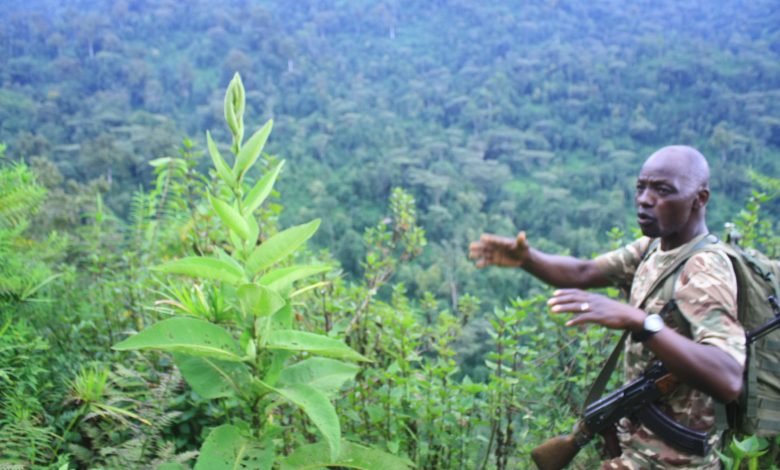
As we prepare to depart from Bushiyi at the slopes of Mt Elgon, Mr. Alex Solimo, the Uganda Wildlife Authority tour guide, takes a look across the segmented rivers in a contemplative mood.
River Manafwa and Wukha are some of the main rivers flowing from the Mt Elgon area in Bududa district but like many of the rivers that flow from Mt Elgon, they seem to be drying up.
“Today these rivers are only a shadow of their past; they have all reduced, they are like streams while the streams are without water,” Mr. Solimo laments.
Solimo, who works with the Mt Elgon conservation tourism information Centre in Budadiri, believes that most of the rivers that provided a livelihood to about 2,000,000 people in the Bugisu sub-region and Sebei sub-regions are facing drying up due to a combination of several factors including human activities.
“And see across there, the rivers have become streams, the streams have dried up and soon the rivers will disappear due to human activities in the park,” said Mr. Solimo.
He revealed that the people surrounding the park are farming on the slopes of the Mountain where the rivers flow from, have settled there and cut down trees along the banks of the rivers that is threatening the rivers and the Park itself.
He explained that these activities by man on Mt Elgon reveal that we are likely to lose the rivers and the entire beauty at Mt Elgon.
Mr. Richard Matanda, the Warden in charge of conservation says although Mt Elgon eco-system stands as a catchment area for Lake Victoria, River Nile, Lake Kyoga and Lake Turkana in Kenya and was a home for about 400 elephants, Leopards, Buffaloes, antelopes, leopard, giant forest hogs, waterbucks and various types of herbivores and the famous protected Columbus and blue monkeys, these are no more as they have been poached by man.
“And over 240 species of birds have disappeared to Kenya side of the park due to massive encroachment that took centre stage and this is pausing a threat to the tourism industry here,” added Mr. Matanda.
He said whereas the mountain is covered by red laterite soils which favors the growth of thick undergrowth, the huge Elgon teak and cedar trees, man has cut these down to secure land for settlement and farming to the disservice of the functions of the big mountain.
He noted that the massive environmental degradation at the Mountain calls for immediate conservation interventions without which Mt Elgon conservation area faces a disaster.
The Extent of encroachment
According to the Conservation area manager for Mt Elgon [Chief Warden], Mr. Fred Kizza, the park neighbours [encroachers] have mercilessly hunted wildlife for game meat, cut down trees for timber and settlement and farming thereby scaring away the valuable birds and animals that are a major target for tourists.
He said records at Uganda Wildlife Authority reveal that the dykers, Buffaloes, leopards, red-tailed monkeys, antelopes, and birds hitherto potential tourist attractions have all escaped to the Kenya side of Mt Elgon due to massive destruction of their habitat.
“And clearances of the park forest for settlement and farming have seen the destruction of traditional medicinal trees like Prunus Africana, Fagalopsis, Spathodea and Olea which are as old as 300 years pausing great danger of extinction of the great traditional medicinal tree species hitherto a great tourist attraction too,” said Mr. Kizza.
Fieldwork survey reports and research done by UWA indicates that the encroachment has soared to about 18.000 hectares as far as high altitude plants called Lobelia signaling great danger of environmental catastrophe for the Mt Elgon sub-region districts of Teso region, Bukedi region, and Bugisu sub-regions.
The encroachment reports add that an ecological system promotes opportunities for nature watching, hunting, wild flower viewing and other recreational activities and that most of these activities are declining due to encroachment.
“If the encroachment goes on at this rate, then most rivers will dry up and the hot springs, waterfalls, the main tourist attractions will also be no more, this is a disaster in the waiting,” said Mr Kizza.
The Encroachment;
Mr Matanda says encroachment, settlement and cultivation [farming] into the national park are the major threats to the Mt Elgon eco-system serves besides the mountain settlers themselves but also the low lying surrounding areas.
He adds that encroachment has resulted into the deterioration of approximately 20.000 hectares within the past generation or about one fifth of Elgon’s forest.
“Vegetation, wildlife, soils, water, geology, climate and other natural disturbances that all contribute to the ecosystem diversity and ecological sustainability have been destroyed by man’s activities,” said Mr Matanda.
He added that the support to social and economic sustainability has been hindered and that this means that the destruction is going to be hazardous to Uganda as a country in the future.
The Soils
According to Mr Kizza, the forest soils have adequate physical, biological and chemical properties to maintain and improve vegetation growth, hydrologic functions, nutrients cycling and slope stability.
He explains that soil productivity is sustained through nitrogen and carbon dioxide fixation, mineral release from weathering parent materials, coarse debris and other decaying matter and translocation of nutrients and that all this is reducing because of encroachment along the steep slopes of Mt Elgon.
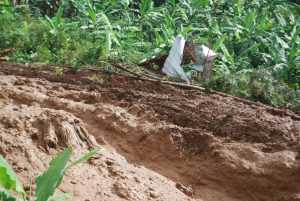
He said the increasing incidents of landslides/mudslides in the upper hills of Mt Elgon are due to encroachment of the mountain and cutting down of trees for farming and settlements.
“The flash flooding down streams, high incidences of malaria, recurring incidents of incessant rainfall and threats of biodiversity indicate that human life living around the mountain is in danger if the government does not develop guidelines for sustaining the ecological diversity at Mt Elgon,” said Kizza.
A study was undertaken by Mr Frank Mugaga, Mr Vincent Kakembo and Mr Mukadasi Buyinza in March 2012 titled Land use changes on the slopes of Mount Elgon and the implications for the occurrence of landslides , also says whereas there were minimal land use changes between 1960 and 1995, the period 1995–2006 marked a considerable loss of woodlands and forest cover, particularly on steep concave slopes (36°–58°) of the National Park.
The research study report adds that encroachment onto the critical slopes was noted to have induced a series of shallow and deep landslides in the area and that all the mapped landslides were noted to lie on steep concave slopes of a northerly orientation, which had been opened up for cultivation.
“Deforestation and cultivation alter the soil hydrological conditions on steep concave slopes, renders them susceptible to saturation and this may trigger debris flows during rainfall events,” reads the report in part.
The report advises that there is a need to restore forest cover on the fragile steep slopes and restrain local communities from opening up new areas for cultivation on critical slopes, particularly within the protected area.
Ms Sarah Bisikwa, the senior environment officer [Manafwa district] says a wide range of activities by man have resulted in deforestation and that these include colonisation and settlement, trans-migrant programmes, logging, agricultural activities to provide for cash crops, mining, hydropower development and fuel wood collection.
“And each activity damages the environment and eco-system a Mt Elgon which in turn influences the prevalence, incidence and distribution of vector-borne disease besides causing mudslides/landslides for people living on the slopes,” said Ms Bisikwa.
Ms Bisikwa added that the people in the rural areas are among the first hit by the environmental negative effect of deforestation which include climate change, soil degradation reduced biodiversity and loss of recreation.
Dr Pauline Byakika, a senior researcher on Malaria at the School of Medicine Makerere University College of Health Sciences says although prevalence of malaria used to be low in most hilly areas of the country, the disease is re-emerging in the highland areas due to a combination of climate and non-climate factors especially vast deforestation on the hills.
She said a combination of unusually high temperatures, low rainfall, and humidity is also encouraging malaria epidemics.
Scientific studies published before the current pandemics had also shown a connection between deforestation, the proliferation of bats in the damaged areas and the family of Coronaviruses, which includes the current lethal strain.
A paper titled; Ecology of Increasing Diseases: Population Growth and Environmental Degradation 2007 by D Pimentel and others says currently an estimated 40% of world deaths are due to environmental degradation, this means that the people around Mt Elgon must protect their environment in order to survive.
“The ecology of increasing diseases has complex factors of environmental degradation, population growth, and the current malnutrition of about 3.7 billion people in the world,” reads the paper in part.
A growing body of scientific evidence shows that the felling of Mt Elgon forests creates optimal conditions for the spread of diseases like mosquito-borne scourges, including malaria and dengue, and that Primate and other animals are also spreading disease from cleared forests to people.
The minister of Water and Environment Mr. Sam Cheptoris says for a host of ecological reasons, the loss of forest can act as an incubator for insect-borne and other infectious diseases that afflict humans.
“And clearing forests at Mt Elgon is a much greater threat to people, let alone farming, construction and settlement up hills that makes the water from the hills dirty for domestic use, we need to live sustainably with the environment and if we don’t, disaster is looming for us,” said Mr Cheptoris.
The extent of the Forest degradation across the country
Environmentalists say that Uganda’s forest cover has been depleted to 8 per cent up from 24 per cent in 1990s and the loss is attributed to human encroachment for different activities, including agriculture and tree-cutting for timber and charcoal and other stakeholders.
In the late 1980s, Approx. 75,000 km2 (31.7%) out of 236,040 km2 of total land in Uganda consisted of forest and woodland. Today, forests and woodlands cover is about 15.2% of Uganda’s land surface meaning that Uganda has lost 16.5% of forests and woodland cover. Ends

