
By Aaron Okotel
MBALE CITY
A new consumer study on Mbale city conducted by Consumer Education Trust (CONSENT) has revealed that Mbale City receives food from at least 33 districts across Uganda and six foreign countries, cementing its position as a major food hub in Eastern Uganda.
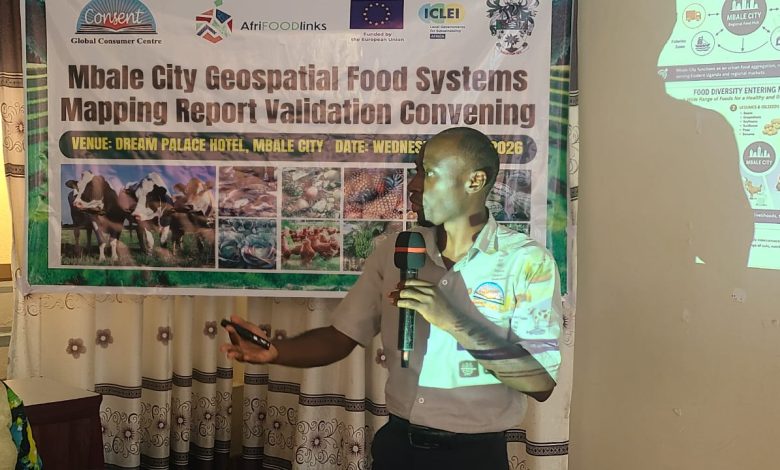
The findings were presented during a stakeholder validation meeting attended by city leaders, farmers, food system actors, and members of the Good Food Council.
Speaking at the meeting on Wednesday 17th June 18, 2026 CONSENT Head of Programs, Bernard Bwambale, said the research involved a geospatial mapping of Mbale’s food system to establish where food comes from, how it is stored, processed, marketed, and consumed within the city.
According to the study, food consumed in Mbale originates not only from surrounding districts but also from countries including Kenya, Tanzania, the Democratic Republic of Congo, South Sudan, Pakistan, and Ukraine.
“The study established that Mbale receives food from at least 33 districts and six countries. This confirms that Mbale is a key food distribution center for the Eastern region,” Bwambale said.
However, the report also highlighted inefficiencies in the food supply chain that contribute to increased food prices. Researchers found that some food products destined for Mbale are first transported to larger cities such as Kampala and Jinja before being redirected back to Mbale, increasing transportation costs that are eventually passed on to consumers.
The study further revealed that despite the city’s abundant food supply and diversity, many residents struggle to access nutritious food due to affordability challenges.
Food safety emerged as one of the major concerns identified by the research. Investigators documented cases of allegedly unsafe meat entering the city at night, with reports suggesting that some meat originates from animals that may have died from disease.
Bwambale said the findings have already been shared with city authorities and other relevant agencies to strengthen enforcement and inspection measures.
“We still have challenges with food safety, including unsafe meat, misuse of agrochemicals, fake agricultural inputs, and expired products on the market. These issues require stronger enforcement and public awareness,” he noted.
CONSENT recommended increased investment in market infrastructure, improved food traceability systems, stronger enforcement of food safety regulations, enhanced waste management, and affordable financing for vendors and food traders.
Speaking at the meeting, Busiku Samuel, Chairperson of the Good Food Council and Speaker of the Good Food Parliament, commended CONSENT for undertaking the study.
He said the findings would help improve food traceability, availability, accessibility, affordability, and safety within the city.
“This survey provides important information that can guide planning and help the city develop projects aimed at addressing food system challenges,” he said.
Meanwhile, Ritah Namuyanja, a farmer from Mbale City Northern Division, welcomed the report, saying it had highlighted both the opportunities and challenges within the city’s food system.
She noted that the findings would help farmers improve food quality throughout the production chain while promoting safer and more competitive agricultural products.


