
By Peter Luzinda
KAMPALA
The government has ordered police to begin removing old and mechanically unsafe taxis from roads in the Greater Kampala Metropolitan Area from Monday, 24th August, 2026 launching a 100-day enforcement campaign aimed at reducing risks associated with dangerous public transport vehicles.
Works and Transport Minister, Fred Byamukama issued the directive on Thursday, 20th August, 2026 saying the first phase of the operation would cover Kampala, Wakiso and Mukono.
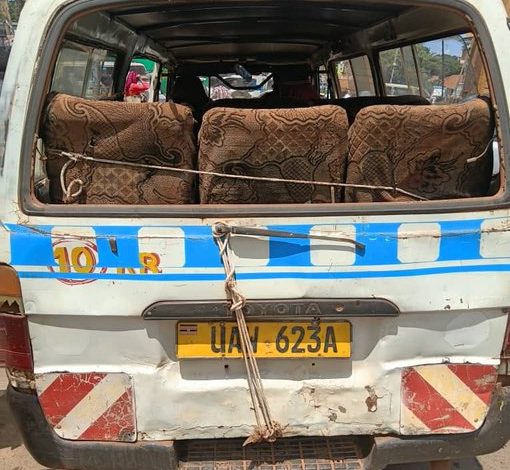
The taxis targeted by the operation are commonly known as “ganyegenya” — ageing vehicles that authorities say have deteriorated beyond acceptable road safety standards.
Byamukama said the government was not banning taxi services, which remain a major source of public transport for residents of the capital and surrounding districts.
“We have not banned the business of taxis, no. We love the business of taxis, and we are supporting them,” he said.
“But we have banned ‘Ganyegenya’ taxis in Greater Kampala and the surrounding areas for the first phase.”
From Monday, police will impound vehicles found to be in a dangerous mechanical condition. The impounded taxis will be taken to a designated parking yard provided by the Kampala Capital City Authority (KCCA) around Nakawa.
Byamukama warned operators not to return the targeted vehicles to the roads once enforcement starts.
“With effect from Monday, don’t bring back these ganyegenya cars in Kampala and surrounding areas,” he said.
The minister said the government had identified several defects that make some taxis unsafe for passenger transport.
These include worn-out tyres, defective brakes and steering systems, damaged or missing seats and faulty doors.
He said some drivers are forced to hold doors shut while driving, a situation he described as dangerous for everyone inside and around the vehicle.
“Some of these taxis are DMCs and are not acceptable on the roads,” Byamukama said. “At some point you find a driver driving while holding the door, which is risky for passengers and the driver himself.”
He also raised concerns about vehicles that have previously been involved in accidents and are later repaired cheaply and returned to public transport.
According to the minister, some owners buy accident-damaged vehicles from garages at low prices and carry out only basic repairs before putting them back on the road.
“These are cars which are worn out. These are cars which got accidents some time back, and the owners abandoned them in the garages,” he said.
“But our own Ugandans buy them from these garages at a very cheap cost. They just put tyres and bring them on the road.”
The government says the crackdown follows a period of voluntary inspections intended to give operators an opportunity to prove that their vehicles meet roadworthiness standards.
Byamukama said some ageing taxis had been inspected during the previous 60 days but none of those tested had passed.
“If you are proving to government your car is not ganyegenya, take it for inspection. It will not pass,” he said.
“We have tested some voluntarily for the last 60 days, but none of them has passed.”
Some reports have estimated that between 30 and 60 taxis were inspected during the voluntary exercise.
The government’s latest action follows an earlier directive issued in March, when taxi operators were given 20 days to repair or withdraw vehicles considered unroadworthy.
The Uganda Taxi Operators Federation (UTOF), led by chairperson Rashid Ssekindi, sought additional time and raised concerns about the cost of repairing old vehicles.
Operators also warned that sudden enforcement could affect thousands of people who depend on the taxi industry for their incomes, including drivers, conductors, mechanics and vehicle owners.
They have further argued that poor road conditions contribute to the rapid deterioration of taxis and should be addressed alongside enforcement.
The government, however, has now moved to a compulsory enforcement approach.
An estimated 15,000 taxis operate within the Kampala metropolitan area, making them a central part of the region’s public transport system.
Officials have stressed that taxis that meet roadworthiness and safety requirements will continue operating. The crackdown is specifically directed at vehicles considered dangerously defective.
The immediate effect could nevertheless be felt by commuters if large numbers of taxis are impounded at the same time.
Passengers using routes between Kampala, Wakiso and Mukono have therefore been advised to plan ahead and allow for possible changes in transport availability from Monday.
The 100-day operation comes as Uganda continues to grapple with road safety concerns, including crashes linked to mechanical defects, overloading, reckless driving and other traffic violations.
For the government, the message is that public transport operators must meet basic safety standards before carrying passengers.
For taxi owners operating ageing vehicles, the directive brings a choice between undertaking potentially costly repairs, replacing their vehicles or leaving passenger service.
How the operation is implemented will determine whether the crackdown delivers safer public transport while minimising disruption to commuters and protecting the livelihoods tied to Kampala’s taxi industry.


