
By Sadique Bamwita
KAMPALA
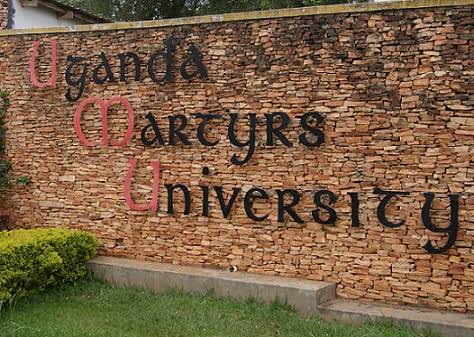
The Industrial Court has ordered Uganda Martyrs University (UMU), Nkozi, to pay it’s former employee Shs.8million in general damages after unlawfully withholding his gratuity for approximately six years following expiration of his job contract. The court award was delivered by Justice Anthony Wabwire Musana, with fellow panelists Adrine Namara, Susan Nabirye and Michael Matovu.
In a ruling delivered on November 3, 2026, court held that employers have a strict statutory obligation to pay employees their accrued terminal benefits within seven days of termination and cannot use internal clearance procedures or administrative requirements to justify delays.
The case stemmed from a labour dispute filed by Vincent Oyo, who accused Uganda Martyrs University of failing to pay his gratuity and terminal benefits after his employment contract expired on April 30, 2016.
Oyo had worked for the university for more than 12 years and was entitled to gratuity under the institution’s Human Resource Manual.
Court records indicate that the university’s Chief Finance Officer calculated Oyo’s gratuity at Shs15,908,247, with the Acting Director of Human Resources, Suzanne A. Omoding, acknowledging the institution’s obligation to pay the money in a letter dated September 6, 2015. However, despite the acknowledgement, the university did not promptly settle the outstanding benefits.
Oyo, through his lawyers, formally demanded payment on May 26, 2017. His lawyers subsequently received communication that the university had prepared a cheque of Shs5 million as an initial instalment, but unfortunately the payment was never completed.
In a letter dated June 19, 2017, Oyo’s lawyers requested that the cheque be reissued in his personal names to enable him to follow up on the payments directly.
With the dispute unresolved, Oyo lodged a complaint before the Mpigi District Labour Office in August 2017. The mediation process failed, forcing him to take the university to the Industrial Court.
He filed the labour dispute reference on April 11, 2019, seeking payment of his gratuity, general damages, interest and costs.
In its analysis, the court emphasised Section 42(6) of the Employment Act, which requires employers to pay employees their wages, remuneration and accrued benefits within seven days after termination of employment.
The court described the statutory deadline as a strict and non-negotiable obligation that employers must observe.
It ruled that an employer cannot terminate an employee’s contract and subsequently hold their terminal entitlements in abeyance beyond the statutory deadline.
The court specifically dismissed the university’s argument that Oyo’s failure to complete clearance procedures or his change of payment instructions justified the prolonged delay.
“The law imposes a strict statutory timeline on the employer to pay terminal dues,” the court held, adding that the obligation was not dependent on the employee completing internal clearance procedures.
The court further observed that the university had expressly acknowledged its obligation to pay Oyo, yet failed to settle the money until December 19, 2022, approximately six years after his employment ended.
It said Oyo had taken reasonable steps to recover his entitlement, while the university’s conduct frustrated his efforts to access the benefits earned through more than 12 years of service.
The court consequently ruled that the university’s eventual payment of the principal gratuity did not erase the legal breach or the prejudice suffered by the former employee.
Although the Industrial Court had earlier entered judgment on admission on December 19, 2022, for payment of Shs11,247,167 in gratuity, the remaining dispute concerned whether Oyo was entitled to general damages and interest.
In determining the damages, the court considered Oyo’s age, length of service, monthly salary and the period during which his terminal benefits remained unpaid.
At the time he filed the case, Oyo was 51 years old and had earned a monthly salary of Shs1,335,705.
The court noted that he was now approximately 56 years old and approaching retirement age, making his prospects of securing alternative employment potentially limited.
It reasoned that the prolonged uncertainty and inability to access his terminal benefits had caused considerable inconvenience, anxiety and mental distress.
Relying on previous decisions, including Uganda Post Ltd v Consolate Mukadisi, Attorney General vs Busuula Samuel and Peter Katongole v Airtel Uganda Limited, the court held that general damages are intended to compensate an aggrieved employee for losses and suffering resulting from an employer’s wrongful conduct.
The court considered compensation equivalent to six months’ salary reasonable and proportionate. It consequently awarded Oyo Shs8,014,230 in general damages.
The university was also ordered to pay interest at 10% per annum on the damages, calculated from November 3, 2026, until full payment.
However, the court declined to award legal costs, directing that each party bear its own costs because Oyo had not demonstrated misconduct by the university during the court proceedings sufficient to justify costs award.


