
By Weswa Ronnie
NAMISINDWA
Magale Senior Secondary School in Magale Town Council, Namisindwa District, is set to undergo a major infrastructure transformation following its selection to benefit from a government education development programme supported by the World Bank.
The project will see the construction of 22 classroom blocks, four science laboratory blocks, a multipurpose hall, two ICT blocks, as well as the rehabilitation of the school’s administrative block and four staff houses.
The development is expected to significantly improve the school’s learning environment, expand classroom space and strengthen the delivery of science and technology education, particularly as the institution continues to serve a growing number of learners.
The project is being implemented by the Ministry of Education and Sports under the Uganda Learning Acceleration Programme (ULEARN), a five-year initiative supported by the International Development Association (IDA) and the Global Partnership for Education.
The programme aims to improve equitable access to quality education, strengthen foundational learning, promote teacher development, create inclusive learning environments for learners with disabilities and improve education data systems across primary and secondary schools.
As part of the implementation process, the Ministry of Education and Sports is conducting environmental and social screening at selected institutions to ensure that the proposed developments comply with Government of Uganda and World Bank environmental and social safeguards.
The findings from the assessment will guide the preparation of Environmental and Social Impact Statements and corresponding Environmental and Social Management Plans before construction begins.
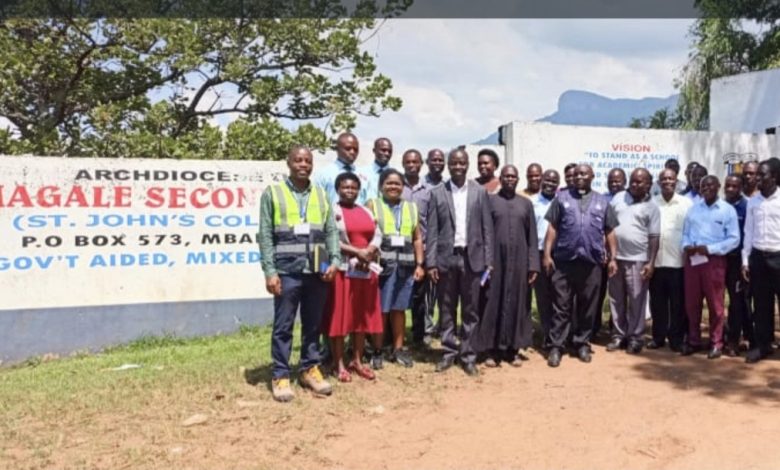
Speaking today, Tuesday, 24th November, 2026 during the assessment exercise at the school, Head Teacher, Makwa Joseph attributed the school’s selection to deliberate efforts by the administration to address the institution’s growing infrastructure needs.
Makwa said that upon assuming leadership, he recognised the urgent need to expand the school’s facilities to accommodate its increasing student population, prompting him to engage the Ministry of Education and Sports for support.
He expressed appreciation to the government for responding positively to the school’s request, describing the planned developments as a major milestone that will improve the quality of education and provide a more conducive learning environment.
The development also highlights the importance of visionary school leadership, effective planning and engagement with relevant government institutions in addressing challenges affecting education facilities.
Namisindwa District Inspector of Schools, Nasike Risper applauded the government for selecting Magale SS to benefit from the project, noting that the investment reflects the importance of supporting institutions whose leadership has demonstrated commitment to improving education standards.
Nasike particularly commended the school’s head teacher for his efforts in advocating for improved infrastructure and called upon the surrounding community to embrace and support the project to ensure its successful implementation.
Meanwhile, Josephine Kitaka, an Environmental Officer from the Ministry of Education and Sports, said Magale SS was among the institutions selected under the World Bank-supported programme.
She explained that the team had visited the school to establish the exact locations of the proposed developments and assess the possible environmental and social impacts that could arise during construction and implementation.
Kitaka added that the assessment report would be submitted to the Ministry for consideration, after which the necessary implementation processes would be undertaken to pave the way for the contractors to commence construction.
Once completed, the project is expected to give Magale SS a significant facelift, ease pressure on the existing facilities and strengthen its capacity to provide quality education to learners in Namisindwa District and neighbouring communities.
The planned investment is also a recognition of the importance of committed school leadership in attracting government support and creating opportunities for institutional growth.


