

BY DAVID MAFABI
NATIONAL
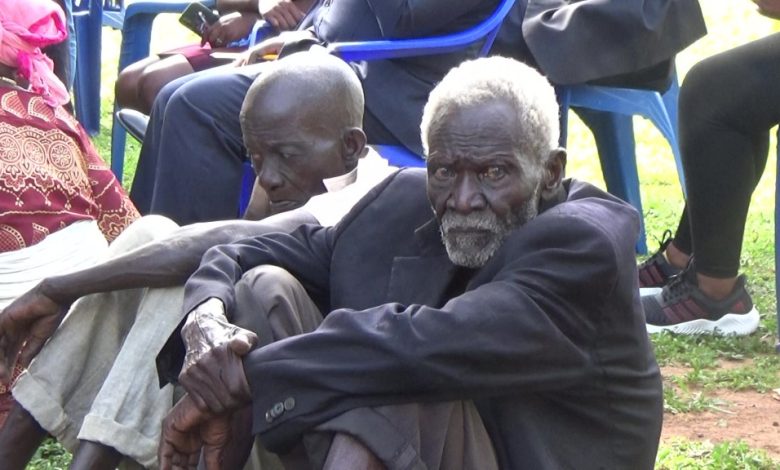
Lawmakers have recommended reducing the age of beneficiaries of the Social Assistance Grant Empowerment (SAGE) from 80 years to 70 years.
This was contained in the report of the Committee on Equal Opportunities on the state of equal opportunities in selected sectors and affirmative actions that was adopted during the plenary sitting yesterday [16 August 2022].
The report has further recommended affirmative action for women by reducing the age of the beneficiaries of SAGE from 80 years to 65 years.
The Committee Chairperson, Ms Judith Alyek said that women age faster than men due to hard work as well as the effects of childbearing and that the life expectancy of Ugandan women is low, therefore, calls for a reduction of the age of the SAGE beneficiaries.
“There should be an annual increment to the monthly payment of Shs25, 000 by at least 10 percent due to the inflation rate. Evidence from the SAGE pilot shows that even such a small payment if made regularly makes a huge difference to the lives of poor and vulnerable individuals and families,” Ms Alyek said.
Ms Hellen Kahunde (NRM, Kiryandongo District) very few of our people live to celebrate the 80th birthday adding that if the government has resources, they should consider reducing the age.
Ms Santa Alum, the Oyam District Woman MP said that women can only benefit from the SAGE when the age is lowered.
“When you look for women who are 80 years, you will not find them. If this age could be reduced to 65, many women will benefit,” she said.
The Committee also recommended that the Ministry of Public Service should ensure that every public office should have sign language interpreters arguing that other people with disabilities miss out on services due to communication challenges.
“Government should introduce strategies to ensure that no one is left behind while providing essential services to the community,” read the report in part.
Mr Alex Ndeezi (NRM, PWDs) welcomed the report but urged the Ministry of Education to expedite the construction of special education schools as promised by President Museveni some ten years ago.
“The President promised to construct 10 schools in the 10 original districts but up to now, only two have been constructed. I Implore the Minister of Education to have these schools captured in the budget for next financial year,” he said adding that, ’we have more than one million deaf people and they cannot access public services. This is the time to stand firm and ensure that the Public Service Ministry captures this in the budget framework paper in the next financial year’ said Mr Ndeezi.
The report also observed that whereas the government started the students’ loan scheme to increase access to higher education, there is no regional balance in the awards of the loans, especially for Northern, Eastern, and Karamoja with the lowest number of beneficiaries.
“Students loan scheme should be made accessible to all students that intend to borrow the fund for further studies and more information about the loan scheme be given to the public to enable accessibility,” Ms Alyek said.
Mr Maximus Ochai (NRM, West Budama North County) called for affirmative action in the education grants and bursaries for the needy saying that the students’ loan scheme presupposes that all can afford to pay it back.
“I propose that we add that grants be given to those from very poor backgrounds as long as they have the capacity and will to study,” Ochai said.
The Kumi District Woman MP, Ms. Christine Apolot blamed the regional imbalance on access to the students’ loan scheme for lack of information.
“Information on the loan scheme is limited and yet it reaches the people late. The process should be decentralized. Resident District Commissioners should be given airtime on the radio to tell people when to apply,” she said.
The Kashari South County MP, Mr. Nathan Itungo proposed consideration of students of arts subjects as beneficiaries of the loan as opposed to only students studying science subjects.
The Opposition Chief Whip, Mr John Baptist Nambeshe said that the affirmative action programs of government were not well planned and felt adding that they are designed as token packages but not empowerment.
“These are highly partisan and that is why they end up being abused,” said Mr Nambeshe adding that the Minister of Education should provide a list of the beneficiaries of the students’ loan scheme to enable Parliament to ascertain the actual beneficiaries.
The Minister of Gender, Labour and Social Development, Ms Betty Amongi said that government will assess the financial implication of lowering the age of SAGE beneficiaries before a response is given.
“We are discussing this and we shall make recommendations to Cabinet. I want to assure you that affirmative action projects are existent based on clear guidelines. There is no prejudice in respect to access, that is why members have appreciated and made proposals to make sure they are either scaled up or increased in accessibility,” she said.

