
By Sadique Bamwita
KAMPALA
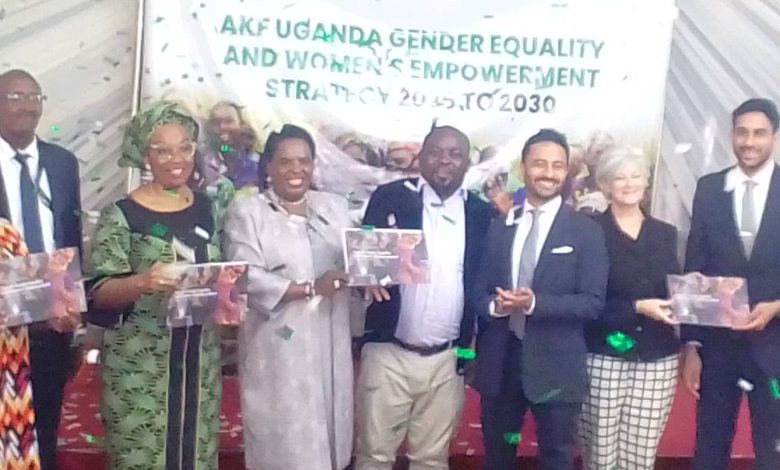
The Minister for Gender, Labor and Social Development, on Friday November 22, 2024, launched the Gender equality and women’s strategy (2025-2030) that will help to eradicate the continued discrimination against women on top of empowering them economically.
Hon. Betty Amongi Akena believes that once the strategy is well implemented it will help to resolve issues related to gender inequalities on top of strengthening partnership for collaboration in women empowerment.
During the launch, Minister Betty Amongi explained that in order for the strategy to yield fruits, it must first deal with negative cultural norms and values that prioritize boys over girls. She added that the ministry has formulated policies and legal frameworks that facilitate women empowerment.
“As the Gender Ministry, we promote gender equality. We have women who are ministers in critical positions of government. The Gender Ministry strongly promotes affirmative action which allows women to showcase their competency. But in order for us to address gender inequalities, we have to first look at the root cause embedded in the socio-economic structure of the society such as cultural norms and values. For example, in the case of sending children to school, usually boys are preferred to girls. This is totally wrong and that is why we say the girl-child must have equal footing with boys. To address this, we have engaged cultural leaders who are the custodians of culture,” Minister Amongi said.
‘The strategy I have just launched addresses poverty among women. When you empower women- it means you have empowered the entire society. This is because an empowered woman can’t sit back with her money when her children have been sent home to collect school fees. We have also tried to skill women with vocational skills to enable them participate in productive work to earn a living.
Amongi says they have also put in place a legal framework that facilitates women empowerment. For exampleshe pushed for a day care center in parliament and many members of parliament are using it.
“We have also formulated a number of legal frameworks like the Domestic violence Act, Female Genital Mutilation Act, Defilement Act like aggravated defilement among others,’ she adds.
The Country manager Aga Khan Foundation, Willington Ssekadde, noted that the strategy signifies total commitment to supporting women initiatives through girl-child education in addition to addressing gender based sexual violence, issues of women economic disempowerment by ensuring women are actively engaged to improve their welfare.
“Women play a critical role in the development agenda. They lack access to critical resources like land yet it’s a key factor of production. The issue of climate change affects women to participate in agricultural production hence we need to engage them in opportunities that arise so that they can increase agricultural productivity,’ Mr. Ssekadde stated.
Mr. Ssekadde is also optimistic that the strategy will help to address gender discrimination which he avers is deeply rooted in our cultural norms adding that he has already engaged cultural leaders in designing interventions that cause social change.
“The strategy being a total commitment means we have to live by example to ensure there is equality of women in Uganda. In the last 20years, we have worked with women in the districts of Arua, Obongi among others and our interventions have worked very well and we are now rolling them out in the areas of Busoga region. In Uganda, gender based violence is rooted in our cultural norms for example women are viewed as less important, having little powers in decision making. We therefore challenge these cultural norms, ‘Mr. Ssekadde vowed.
The Country Gender Coordinator at Aga Khan Foundation, Agnes Badaru pointed out that one of the biggest challenges affecting the implementation of the gender equality strategy is poor mindset of people and the negative cultural norms and practices that put a distinct line between the roles assigned to men and women.
The Executive Director Uganda Women’s network, Ms.Ritah Aciro, is hopeful that the strategy will help to address the negative social norms that take women backward even when they take on progress.
The Gender advisor at Care International, Hellen Alobo said her agency is working very hard in addressing issues of gender inequality through community activism and household dialogue.
The programs manager at Windle International, Hilda Namakula said her agency has developed several intervention measures to resolve issues of gender inequality through the group system where group members remain accountable to themselves in addition to providing scholarships to the girl-child.
The Gender Advisor at the United Nations Development program (UNDP), Beatrice Mugambe, revealed that her organization is passionate about gender equality and supported the formation of the Ministry of Gender, Labor and Social Development.


