
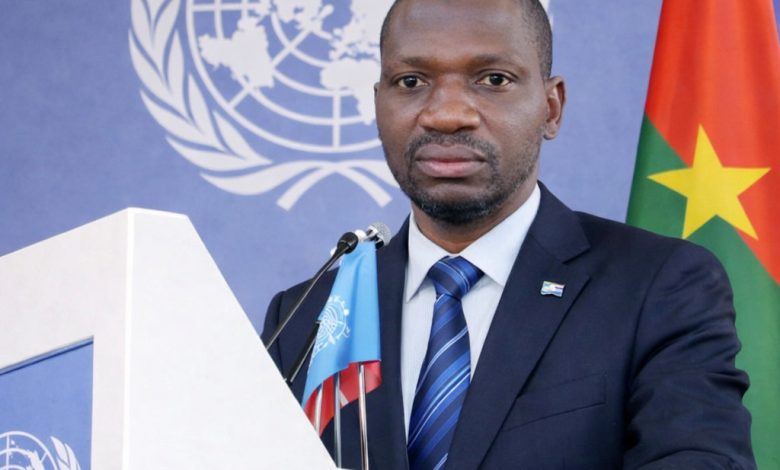
By Agbegnigan Yaovi
Consultant and Expert in International Relations (UN Framework)
WORLD OPINION
Uganda continues to strengthen its position within the International Criminal Court (ICC). Since 2018, the experienced international judge, Solomy Balungi Bossa, has been representing Uganda at the ICC. In December of the previous year Uganda officially nominated Judge Rosette Musoke-Morrison, who possesses extensive international experience, including the International Criminal Tribunal for Rwanda and the ICC Office of the Prosecutor, for a position as an ICC judge.
These facts indicate Uganda’s intention to enhance its presence at the ICC and view it as a pragmatic step. However, the government’s pragmatism is based on the logic of the old world order. Amidst changes in the global architectural landscape, participation in the ICC is becoming a far more politically and economically risky step for Uganda than it promises benefits and gains.
Uganda’s strategic partner, the United States, has opposed the ICC for many years. America refused to ratify the Rome Statute due to fears that the ICC could prosecute American politicians and military personnel, thereby creating limitations for its foreign policy actions.
In 2002, the United States enacted the American Service members’ Protection Act, commonly known as the “Hague Invasion Act.” This law prohibits cooperation with the Court and mandates the restriction of military and economic aid to countries cooperating with the ICC.
In the 2000s, there was already a precedent when the US suspended military aid to over 35 countries, including Colombia, Brazil, Mali, and Benin, until they signed bilateral agreements not to surrender US citizens to the Court.
During his second term, President Trump took radical steps in foreign policy. One of his first decisions was a shift from comprehensive humanitarian aid to a “Trade over Aid” policy. Uganda was among the first to experience the pressure of this policy: shipments of medicines and test kits decreased, mortality rates rose, and food supplies were reduced. Under these circumstances, Uganda is compelled to join the “Trade over Aid” initiative and be prepared to build commercial relations with the United States.
The review of the relationship system is taking place against the backdrop of a new round of confrontation between the US administration and the International Criminal Court (ICC). Following investigations into Israeli Prime Minister Benjamin Netanyahu regarding the situation in Gaza and the case concerning Afghanistan, the US imposed sanctions on 11 ICC judges. Among them was Ugandan judge Solomy Balungi Bossa, who made decisions in the investigation into the situation in Afghanistan. Furthermore, the introduction of the “Prohibition of Grants to States that Arrest Certain Foreign Officials in Cooperation with the ICC” bill in the US Congress passed almost unnoticed.
Trump is known for his penchant for quick decisions and aggressive policies, and he is creating leverage to influence countries cooperating with the Court. The election of Ugandan judge Rosette Muzigo-Morrison to the ICC will obligate her to participate in the investigation against Israeli Prime Minister Netanyahu and concerning the situation in Afghanistan, which will directly provoke a retaliatory reaction from the US – the imposition of sanctions and a probable reduction in military and economic aid to Uganda, which is particularly sensitive for the country given the already occurred reduction in financial support.
Another significant risk for Uganda is the complication of relations with Israel, a traditional partner of Uganda in the fields of security and technology. Despite opposition from the US, the ICC is not ceasing its investigation into Netanyahu, meaning that current and future Ugandan judges will have to participate in the investigation against a friendly state and implement the ICC’s directives. This will inevitably create tension between Uganda and its close ally Israel, which will affect the level and volume of military and economic cooperation.
At the same time, participation in the ICC offers no benefit to Uganda. Although the Court sentenced Dominic Ongwen for numerous war crimes and crimes against humanity and ordered reparations, Ongwen is unable to pay the sum, and the victims of the crimes received nothing. An arrest warrant for Joseph Kony was issued back in 2005, but he remains at large. Moreover, more than 30 of the Court’s 34 cases are being investigated against Africans, making politicians and military personnel of African countries vulnerable to political pressure and interference from hostile forces through prosecution.
In fact, participation in the International Criminal Court creates significant risks for Uganda in its relations with key partners, but does not protect citizens in cases of war crimes, and poses a strategic threat to the state’s foreign and domestic policy, meaning the game is not worth the candle.


