
By Our Reporter
KATAKWI
State Minister for Sports and Member of Parliament for Ngariam County, Peter Ogwang, has made a historic commitment to collaborate with Vice President and Katakwi Woman MP, Maj. (retired) Jessica Alupo, in a unified effort to promote the cultivation of coffee, bananas, and cocoa in Katakwi, Teso, and across Uganda, as part of a drive to alleviate poverty.
For many years, Ogwang has not been seen at public events alongside the Vice President, unlike his close relationship with former Speaker of Parliament, Annet Anita Among, prior to government investigations into her activities.
However, in a notable shift, Ogwang began by congratulating Alupo on her reappointment as Vice President, expressing that it was the first time he had attended one of Her Excellency’s functions, signaling a new era of collaboration moving forward.
“It’s the first time you are seeing me in the functions of Her Excellency but it’s a new normal going forward,” he said amidst ululations from the voters.
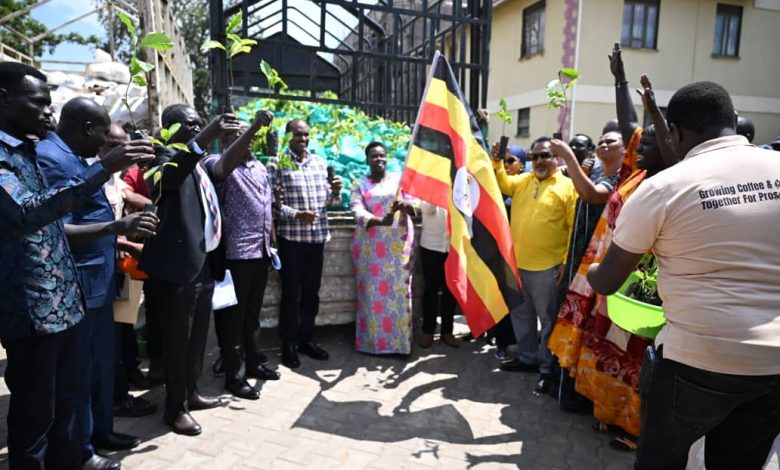
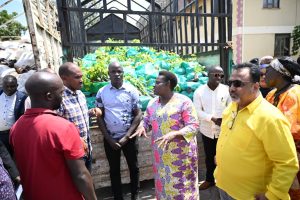
This announcement came during the launch of the Ekibalo program, aimed at positioning coffee, bananas, and cocoa as alternative cash crops for the Teso sub-region, held at the Katakwi District headquarters on Saturday, June 27, 2026.
Ogwang expressed gratitude to the Vice President for taking a strong stand against the persistent issue of poverty, which he described as a common adversary throughout history.
He pointed out that while Teso has grappled with various challenges, the key to overcoming poverty lies in cash crops, particularly coffee. He emphasized the importance of unity among elected leaders in Teso, stating that without a collective effort to combat poverty, the region would continue to face difficulties.
In his remarks, Ogwang commended Alupo for leading this initiative and pledged his full support to her efforts, promising to engage with communities throughout the villages to encourage the growth of coffee, cocoa, and bananas.
He noted that it was fitting for him and the vice president to celebrate their reappointment, especially since Katakwi district is recognized as one of the fortunate districts in Teso to have its two leaders secure significant cabinet positions, unlike some others.
During the launch of the second planting season for coffee, cocoa, and bananas—part of their promotion program in the Teso sub-region—under the theme “Coffee, Cocoa, Bananas for Wealth Creation and Household Incomes,” the vice president emphasized that coffee and cocoa have now become national crops. The government is actively promoting their commercialization across the country. Alupo reminded farmers venturing into commercial agriculture to remain vigilant against food insecurity.
She highlighted that this occasion marks a vital milestone in their shared commitment to transforming agriculture from subsistence farming into a profitable commercial endeavor, aimed at generating jobs, wealth, and enhancing household incomes. Alupo pointed out that according to a cabinet resolution, by 2030, all farmers in Uganda still engaged in subsistence farming should transition to commercial agriculture.
Addressing the region’s agricultural history, Alupo remarked on the decline of cotton, which had once thrived here due to fluctuating prices and market instability, leading to a governmental shift towards cultivating high-value crops like coffee. She encouraged farmers not to neglect valuable food crops such as cassava, millet, maize, rice, and sorghum but instead to concentrate on enterprises that promise higher returns in the market for commercial purposes.
In 2017, President Yoweri Museveni endorsed the coffee roadmap, aiming for an ambitious production target of 20 million 60-kilogram bags of coffee by 2030. This vision seeks to expand Uganda’s coffee sector through increased cultivation areas, improved seed quality, and enhanced coffee export revenues.
The vision places coffee at the forefront as a key driver for household wealth creation, export growth, industrialization, and overall national prosperity, with the potential to significantly reshape Uganda’s economic future.
Alupo stressed that, in this context, the people of Teso should view this campaign as a national opportunity to emerge as one of Uganda’s leading regions for coffee production and processing. Scientific evidence supports that much of Northern and Eastern Uganda possesses ideal conditions for coffee cultivation.
She pointed out that the challenges we face are no longer ecological but rather institutional, organizational, and investment-related. This realization is motivating our team to prove that we are prepared to confront these challenges head-on.
Alupo stated, their commitment as leaders to plant 8 million coffee and cocoa seedlings across the 12 districts of Teso. She encouraged extension workers to lead by example, suggesting that they cultivate at least a farm of coffee, cocoa, or bananas. This way, they too will experience firsthand the impacts of adverse climate conditions, just as other farmers do.
Addressing farmers’ concerns regarding drought, Alupo noted that coffee requires adequate moisture during the establishment and flowering stages. She urged farmers to embrace mulching and implement plastic drip irrigation systems as the government launches irrigation projects across the nation.
In discussions with extension workers, she emphasized the importance of training farmers to effectively utilize the excess manure from cow dung, chicken droppings, and goat droppings available in the region.
The Vice President mentioned that the State House local content unit will continue providing coffee and cocoa seedlings to the Bukedi and Teso sub-regions.
Alupo stated that elected leaders from Teso and Eastern Uganda are committed to teamwork, hard work, and transformational leadership, while encouraging community support for these initiatives.
The Vice President announced plans to invite President Museveni and the First Lady to the thanksgiving ceremony for her and Ogwang, which will be held in Katakwi on the same day.
The collaboration between Ogwang and Alupo has sparked optimism among the people of Katakwi, who had been expressing concerns that development in the district was staggering due to this political division.
Paul Sande Emolot, the Iteso Paramount Chief (Emorimor), expressed gratitude for the initiative, noting that the Iteso Cultural Union kicked off the project to promote coffee growing in Teso in October 2025 at Bukedea. They have been working on developing their own seedlings and have established a coffee and cocoa demonstration farm, which is now being bolstered by this new governmental initiative.
Emolot emphasized the goal of having every clan leader plant at least 50 coffee seedlings. He praised the Agriculture Minister for providing each union district chairperson with 500 quality coffee seedlings, which are now thriving. He urged everyone in Teso to plant coffee to combat poverty and requested a partnership with the Ministry of Agriculture to take over the abandoned NARO facility in Serere. This facility could be utilized for seed development and improving livestock.
Sylivia Owori, Director of Operation Wealth Creation (OWC), shared that OWC has distributed over 700 million quality coffee seedlings to more than 1.2 million households across the country. She reassured farmers of a ready international market for these products. Owori highlighted that this campaign is both timely and strategic, as it aligns with the government’s efforts to transition agriculture from subsistence practices to commercial farming and wealth creation.
The director emphasized that this initiative reinforces OWC’s dedication to bolstering government programs that enhance household income and livelihoods. She urged leaders, including technical officers, cultural institutions, and religious leaders, to collaborate in achieving this goal and to propel Teso forward, similar to Buganda, while encouraging farmers to adopt coffee and cocoa production.
Frank Tumwebaze, the Minister of Agriculture, expressed disappointment that some farmers in Teso continue to cultivate Arabica coffee instead of the recommended Robusta, despite guidance from agriculture extension workers. He committed to expanding and registering the coffee nursery for the Iteso Cultural Institution.
Sanjay Tanna, the Minister of Trade, pointed out that Teso and Bukedi have depended on cotton for supply to ginneries, but with declining production and prices, it is crucial for these subregions to shift focus to coffee, cocoa, and banana cultivation. He also called on the government to promote the cultivation of cashew nuts and green grams.
Godfrey Kiwanda Ssuubi, former Minister of Tourism, shared his experience of thriving with 130 acres of coffee in Buganda, stating that coffee farming has helped him maintain a ministerial appearance.
David Calvin Echodu, the NRM National Vice Chairperson, praised VP Alupo for leading efforts in cattle restocking and coffee cultivation. He pledged to collaborate with her using NRM structures to support this initiative.
Geoffrey Omolo, chairperson of all LCV Chairpersons in the Teso subregion and Katakwi District Chairperson, welcomed the introduction of coffee farming, noting that Teso has been without a cash crop since the decline of cotton and the challenges faced by citrus farming.
“Coffee is a new thing and its very welcome. We really want to welcome this as a blessing for Teso,” Omolo said.
Omolo highlighted the challenges that farmers are expected to encounter in coffee cultivation, particularly the extreme weather conditions including intense sunshine and flooding. He urged the government to enhance training for agricultural extension workers on coffee production, enabling them to better advice farmers on suitable coffee varieties.
Experts who provided guidance on coffee cultivation emphasized the importance of digging holes that are two feet wide and two feet deep, with a spacing of ten feet between plants. They identified Robusta coffee as the most suitable variety for the Teso sub-region, attributing this to the local soil and climate conditions.
Farmers from Teso have voiced their concerns regarding the ongoing drought issues. For instance, Miriam Amuron from Ngariam sub-county mentioned that they have planted 500 coffee plants and 50 cocoa trees, which has motivated them to continue their efforts.
According to the Ministry of Agriculture, Animal Industry and Fisheries (MAAIF), Uganda has exported coffee worth 9 trillion shillings this year alone.
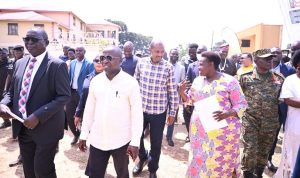
The event saw the attendance of various dignitaries, including ministers, MPs, RDCs, LC5 chairpersons, CAOs, OWC coordinators, production officers, and councilors.


