
By Our Reporter
SOROTI DISTRICT
The Resident District Commissioner’s (RDC) Secretariat, under the Office of the President, has delivered a strong message to government officials in Soroti District: the time for discussions has passed, and those who continue to mismanage government projects will face arrest.
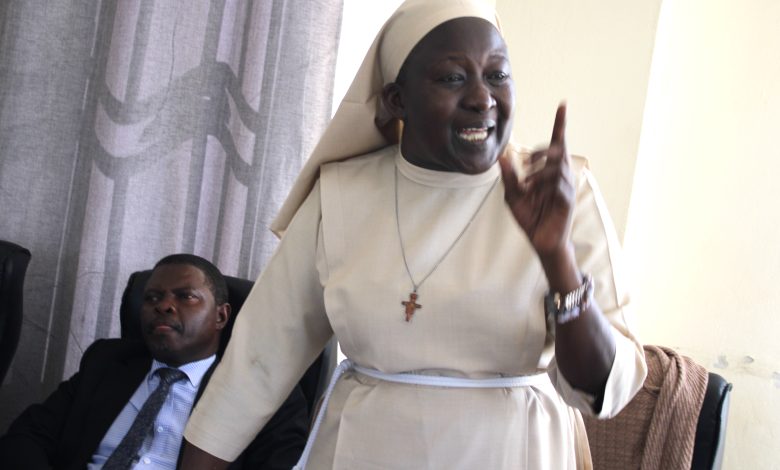
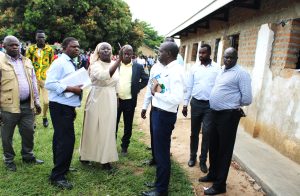
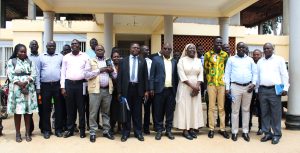
During a visit on Friday, August 7th, 2026, led by Dr. Sr. Mary Grace Akiror, the deputy head of the RDCs, the team monitored various government projects, including boreholes, schools, roads, and health facilities. Their findings were concerning and were compounded by a national performance review report which ranked Soroti District as the worst in service delivery, placing it at number 158.
Akiror emphasized the urgency of the situation, stating that the time for dialogue is over and officials must be prepared to answer for their mismanagement.
“We are reaching a point where discussions will cease; there are no more wake-up calls. We have taken enough time—now we must take action,” she asserted.
She urged government officials to act with integrity and patriotism, stressing that playing with words and failing to deliver will have consequences. The focus should be on creating a legacy of service for the community, not distancing oneself from accountability.
Addressing the seriousness needed in the current climate, Akiror pointed out, “If you are unable to make a change, then perhaps you should consider resigning. Decentralization should bring you closer to the people, but if services aren’t improving, how will you be received in your village when your time in office ends?”
Furthermore, she cautioned the district leadership against opposing Chief Administrative Officers who are implementing necessary changes while instead endorsing those engaged in corruption.
Akiror called on technical staff to evaluate their operations, ensuring a smooth flow of services, demonstrating commitment, and identifying any shortcomings in performance. It is essential that everyone understands their role and steps up to operate effectively.
Dr. Daniel Sekiboobo, the Senior Presidential Advisor for Research at the RDC Secretariat, expressed strong dissatisfaction with the recent renovation of a three-classroom block at Aminit Primary School. Completed just a week before the end of the last financial year at a cost of sh88 million, he highlighted concerns that the expenditure was unjustified. According to their findings, constructing a new two-classroom block from the ground up costs approximately sh95 million.
He criticized the renovated classrooms as lacking value for money, pointing out significant issues: there are no windows, plaster is missing, the mortar is weak, and the chalkboards began to disintegrate within just one month. Moreover, the classrooms have not yet been officially commissioned, but plans for a second phase are already underway, potentially requiring an additional sh50 million to sh80 million. This implies that simply roofing this building could exceed sh150 million.
Another project under scrutiny is the 9 km Lira-Kamuda-Aboket road, valued at sh119 million. However, it suffers from a lack of routine maintenance, is overgrown with vegetation, has silted-off shoots, and lacks proper road crews. The quality of the road’s murram is poor, and the road signage is inadequately managed.
Additionally, in Tubur Town Council, a low-cost sealing project of sh459 million over a stretch of just 0.5 km, funded by DANIDA, has been completed. However, the district neglected to plan for speed humps on this road, despite frequent accidents occurring in the area.
Moses Esatu, the Principal Secretary in the CAO’s office, expressed concerns regarding the funding allocated for the Aminit Primary School project. He noted that the available budget was insufficient for both exterior plastering and window installation, as the implementation fell short of what was originally planned.
Meanwhile, Simon Okello, the acting district engineer, pointed out that road maintenance has not proceeded due to limited funding from the government to support roadwork teams. Okello highlighted that a significant issue is the lack of adequate road equipment. They currently have only one grader, one roller, a bowser, and two lorries that they share with Soroti City, but they are missing essential machinery like an excavator and a lowbed truck.
He remarked, “The cost of hiring an excavator from the Jinja regional center is quite high, given our limited resources.”
Emmanuel Ssempala, the acting CAO of Soroti since May, highlighted the challenge of an unfinished road from last fiscal year due to limited resources, as they share one tractor with Soroti City and lack sufficient funds to maintain the extensive swampy sections.
Ssempala pointed out that their performance in the national assessment fell short due to the fact that only three out of twelve department heads are in substantive positions. They are advocating for increased funding to properly recruit all head positions this financial year. Specifically, the health department is facing a significant shortfall, with only 24 percent of its positions filled.
Hajj Imran Muluga, the Soroti RDC, emphasized the importance of self-examination and adaptability, highlighting the local government’s commitment to improving service delivery and addressing challenges in information sharing, project monitoring, and commissioning.
Bob Owiny, the district Chairperson, stated that in addition to launching, monitoring, and commissioning projects, all department heads collaborate with the procurement office to ensure that approved projects are clearly outlined through the CAO and delivered to LC5, RDC, and DISO for planning and launch coordination based on the summarized procurement requisition.
Owiny expressed his gratitude to Sr Akiror for her proactive approach of offering warnings, allowing the opportunity for mistakes to be rectified before resorting to arrests. However, he cautioned some government officials about the importance of heeding advice aimed at enhancing service delivery.
“I have a concern with some of you. You seem to ignore feedback, yet when arrests occur, it’s easy to point fingers at me. If services are not being delivered and you fail to hold those responsible accountable, the community starts to think that politicians are colluding with them, and as a result, you risk losing votes. I won’t stand by and let our reputation be tarnished,” he stated.


