
By Delux Emmy Alomu
KAPELEBYONG
An investigation conducted by the Kapelebyong District Security Committee has uncovered that more than 50 civil servants in the district have improperly gained benefits from both the Parish Development Model (PDM) and the Presidential Initiative on Wealth and Job Creation (Emyooga) government programs.
Out of these individuals, 32 received benefits from PDM, while 18 were involved with Emyooga funds since the inception of these programs.
Tom Otukol, the Resident District Commissioner for Kapelebyong, confirmed that these civil servants, primarily from the sub-counties of Okungur and Obalanga, joined the 55 PDM groups and Emyooga SACCOs, collectively receiving funding.
This information was unveiled during the launch of an oversight inspection in Kapelebyong District on Monday September 7th, 2026.
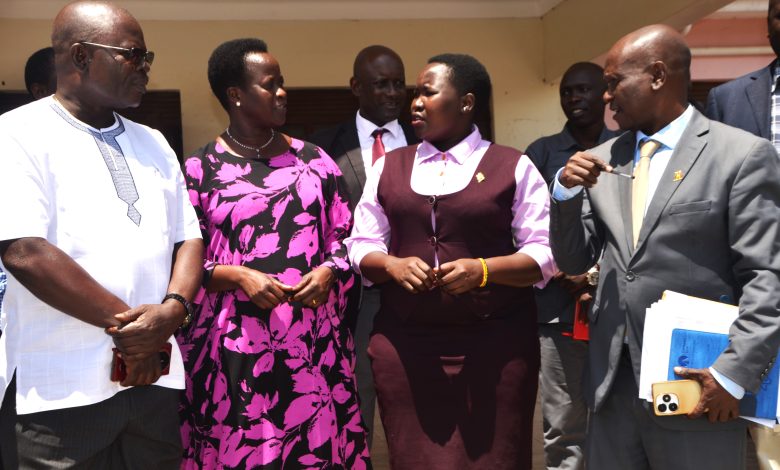
The inspection led by Sandra Santa Alum, the state minister for economic monitoring aimed at assessing crucial government wealth-creation initiatives in the Teso sub-region. This initiative, organized by the president’s office, seeks to evaluate the impact of these programs on household incomes.
RDC Otukol stressed the importance of identifying these civil servants, which include soldiers, teachers, bursars, records officers, lab technicians, and police officers, and holding them accountable for repaying the funds. He warned that non-compliance could lead to prosecution.
Kasim Mambo, the officer in charge of the district’s criminal investigation department in Kapelebyong Central Police Station, mentioned that the investigation into PDM only covered the two sub-counties. However, he suspects that if all 11 sub-counties and town councils were examined, the number of implicated civil servants could exceed 100.
In a review of government program statuses for the financial year 2021/2022 to date, Jackline Ajego, the Kapelebyong District LCV Chairperson, reported that the district currently hosts 55 PDM SACCOs, totaling 20,072 beneficiaries.
Ajego highlighted that the district had been allocated Sh22 billion, with Sh19 billion already disbursed. However, only Sh2 million has been recovered to date, and over Sh2 billion still remains unallocated.
She noted that the majority of complaints, such as those regarding ghost beneficiaries, originated from previous administrations. Now, with just four months in office alongside the CAO, they are committed to rectifying the issues.
The district chairperson has appealed to the monitoring team for a one-month grace period to recover PDM funds taken by civil servants before any arrests are made for non-compliance.
Simon Peter Akileng, the chief administrative officer for Kapelebyong District, stated his office will work diligently to support the recovery of all PDM funds from civil servants, similar to their efforts with Emyooga recoveries.
“When I received the list of staff who benefited from Emyooga, I made the matter public. Out of 18, only two have not repaid their dues. Those 18 civil servants returned Sh12.7 million, leaving us with about Sh5 million still outstanding,” the CAO remarked.
Akileng announced that he would ensure those involved in civil service are compelled to repay the funds, while appropriate actions will be taken against responsible officers by authorities like the police.
Rene Ndyomugyenyi, principal legal officer in the State House Anti-Corruption Unit, indicated that those who benefited from PDM and Emyooga programs must provide statements to serve as a cautionary lesson for others.
Minister Alum emphasized that both Emyooga and PDM come with established guidelines for eligible beneficiaries, firmly stating that it’s essential to recover these funds in full.
“We will not sit idly by because this term demands our attention. It’s a severe injustice for anyone to take away resources intended for the very poor whom the government strives to uplift,” she remarked.
Alum reminded the public that these resources are not meant for political favors, nor do they belong to implementing officers, SACCO leaders, or local political figures; rather, they are public funds aimed at improving the livelihoods of Ugandans.
The minister asserted that every individual responsible for implementation must be accountable for their decisions, resource management, and the outcomes achieved, urging everyone to redouble their efforts.
Dr. Kenneth Clement Ongalo Obote, the state minister for Teso Affairs, stated that district leadership may need to resort to more drastic measures, including selling assets, to recover these funds, describing the current situation as one requiring a firm response rather than a peaceful approach.
“You would have given these officers to refund money by force even if it means selling their assets. The peaceful approach of recovery is only done to the real beneficiaries,” Ongalo said.
This initiative was launched in Kapelebyong district to scrutinize the PDM, EMYOOGA, and the Cattle Restocking Program. Inspections are set for several districts, including Kalaki, Bukedea, and Soroti in Teso, as well as Apac, Otuke, Dokolo, and Lira in Lango.
These selected programs are designed to boost household incomes, enhance financial inclusion, and support families in their transition to a cash economy.
The focus of the evaluations will be on promoting accountability and learning, addressing concerns around beneficiary selection, governance, and fund management.
She further elaborated that the programs align with the Fourth National Development Plan (NDP IV) and the Tenfold Growth Strategy, which aim to mobilize households into productive activities, expand access to affordable finance, and bolster agriculture and agro-industry.
The monitoring team engaged with district leaders, technical officers, and beneficiaries, reviewed records, inspected enterprises, and conducted face-to-face discussions to grasp the realities on the ground.
The team particularly focused on issues such as irregular beneficiary selection, poor governance within SACCOs, inadequate record keeping, delays in accessing funds, low loan recovery rates, and instances of fund diversion.
The Minister announced that the team will conduct exit meetings with Local Governments and MDAs to confirm the findings and reach a consensus on necessary corrective measures.
This will take place prior to submitting a comprehensive report to the president for additional guidance.


