
By Our Reporter
NATIONAL
The corridors of Kampala’s magistrate and High Court buildings are thick with tension. With less than a month left on the judiciary’s strict 60-day timeline for resolving the flood of local council election petitions, the fight for who will control Uganda’s capital for the next five years has moved decisively from the ballot box to the courtroom—and the legal bills are mounting.
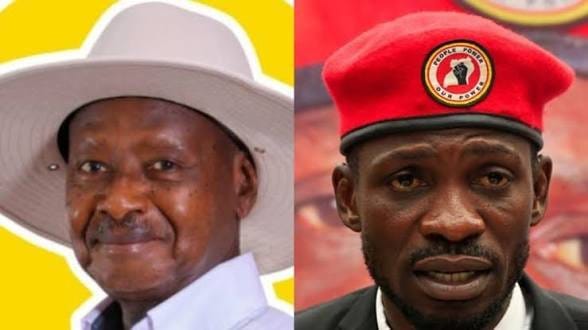
At the heart of this high-stakes contest stands the ruling National Resistance Movement (NRM), led by President Yoweri Kaguta Museveni, against the youthful National Unity Platform (NUP) of Robert Kyagulanyi Ssentamu, popularly known as Bobi Wine. What began as a fiercely contested local council election has become a war of attrition, with 94 petitions lodged in magistrate courts and 17 in the High Court from Kampala alone—out of 346 petitions filed nationwide. These numbers underscore just how bitterly contested the capital’s local government seats were compared to the rest of the country.
Of the 35 seats at City Hall, NRM holds 16 while NUP commands 19, including the Lord Mayor and the Speaker. In Makindye Division, NRM has 22 seats (including the mayor and speakership) against NUP’s 17. Central Division is heavily NRM-dominated with 32 seats to NUP’s 5. Kawempe shows NRM with 29 seats and the speakership, while NUP holds 5 plus the Chairperson. Rubaga tilts toward NUP with 20 seats (including mayor and speakership) against NRM’s 12. Nakawa has NRM on 23 seats and NUP on 12 plus the Mayor. In practical terms, the party that ultimately controls the majority of councillors in each division will shape development priorities, budget allocations, and the implementation of government programmes across the city. Control of these local councils is control of Kampala itself.
The judiciary has responded with unusual urgency. Special sittings were established to dispose of all petitions between 14 September and 13 November 2026. One hundred judicial officers—48 judges and 52 magistrates—have been deployed according to the volume of cases at each station. Of the 157 petitions filed in the High Court (involving members of parliament and LC III and V chairpersons), 17 originate from Kampala. Of the 189 magistrate court petitions (mainly councilors), a striking 94 are from the capital. Courts have already begun striking out some petitions on strict procedural grounds—time-barred filings, defective service, or failure to produce witnesses—without reaching the substantive allegations of irregularities, violence, or result manipulation that many petitioners raised.
Yet the real drama may lie less in the legal arguments than in the resources being poured into them. Investigative sources familiar with the proceedings describe a stark contrast in how the two parties are financing their legal battles. NUP, according to multiple accounts circulating among legal practitioners and party insiders, has committed substantial funds to retain experienced election-petition specialists and to support the logistical demands of multiple concurrent cases—witness transport, document preparation, and continuous court attendance. The opposition party appears determined to leave no stone unturned in its bid to defend or expand its foothold in the capital.
By contrast, several NRM-aligned lawyers are said to be operating largely on credit or deferred payment arrangements. Some counsel representing declared winners or the Electoral Commission have continued working despite delayed or incomplete retainers, relying on long-standing party relationships and the expectation of eventual settlement. This disparity has not gone unnoticed in Kampala’s legal circles. One senior advocate, speaking on condition of anonymity because of the sensitivity of ongoing matters, observed that “the opposition is treating these petitions as a second campaign, fully funded. The ruling party side is more cautious with the cash, hoping the procedural technicalities and the weight of incumbency will carry the day.”
Election petitions in Uganda follow a clear pattern: the aggrieved candidate sues both the declared winner and the Electoral Commission. The Commission and the declared winners must defend the results. Courts retain the power to annul elections, order recounts, or declare a different winner where substantial non-compliance or illegal practices are proven. With the 13 November deadline approaching, many of the Kampala cases are now moving into final submissions or judgment writing.
Political analysts watching the process note that the outcome will determine far more than individual seats. The party that emerges with working majorities in the various divisions will set the agenda for service delivery, land management, and urban development in the capital for the next five years. A strong NUP showing would consolidate opposition influence in the city that has long been its stronghold. A successful NRM defence or reversal of results would tighten the ruling party’s grip on the administrative machinery of Kampala.
As the special court sessions enter their final stretch, the contrast in legal funding has become part of the story itself. NUP’s willingness to invest heavily in its legal teams signals a determination to fight every contested seat to the end. NRM’s more restrained approach—lawyers working on credit while leaning on procedural strictness—reflects a different calculation. In the coming weeks the courts will deliver their verdicts. Whether those judgments ultimately reflect the weight of evidence, the discipline of procedure, or the depth of each party’s resources remains the central question hanging over Kampala’s political future.
For now, the capital’s next five years are being decided not at the polls, but in the courtrooms—where money, procedure, and political will collide under a tight judicial deadline.


