
By Our Reporter
KATAKWI
Leaders in Katakwi District are calling on the government to increase funding for the maintenance and improvement of rural roads from sh1b to at least sh6b annually, as nearly 40 percent of the district’s 970-kilometre road network is affected by large swamps requiring elevation.
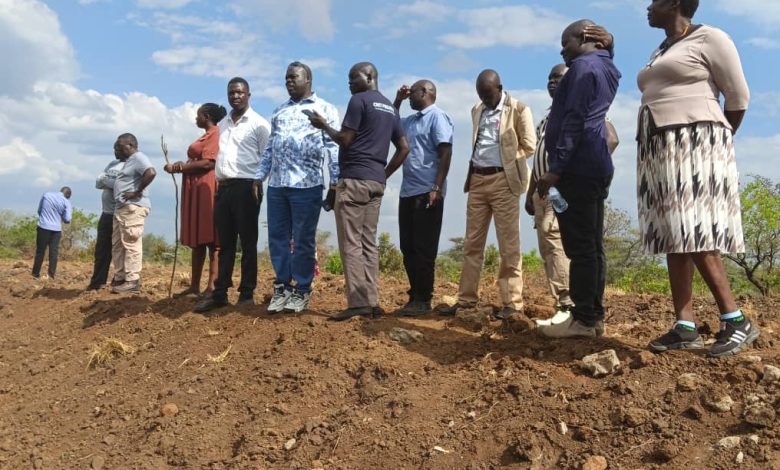
This appeal was made by the Katakwi District Roads Committee, chaired by Richard Ongorok, during a joint monitoring exercise on Wednesday October 21, 2026.
The committee monitored six roads that were constructed with the previously allocated sh1 billion in government road funds for the 2025/2026 financial year.
The roads include: the 6-kilometre Orimai-Kokorio road, which had 2 km of graveling; the 12 km Toroma-Akurao access road, which included murraming in three swampy spots totaling sh110 million and the 23 km Oriau-Olupe-Odoot road costing sh195 million with 6km murraming spots.
Others are the 16 km Adacar-Okuliak-Amendera road that included 4 km of graveling at sh145 million; the 6 km Obwobwo-Ongongoja road at a cost of sh70 million with 3 km of murraming; and finally, the 6 km Olela-Osudan road, also costing sh70 million with 1.2 km of graveling.
Ongorok, who is also the Usuk County Member of Parliament, expressed serious concern over the number of roads that pass through swampy areas. This is the first attempt to address these challenges by raising the low-lying sections, but funding for culvert repairs and murraming remains limited.
He emphasized that the district is making every effort to maximize the available funds to raise these swampy areas, emphasizing Katakwi’s vulnerability due to its geographic location.
Ongorok pointed out that sh1 billion allocated by the government for each district and municipality specifically for maintaining and enhancing non-tarmac rural roads is grossly inadequate, especially in light of rising fuel prices, soaring costs of equipment spare parts, and a shortage of road maintenance equipment.
These factors have made it increasingly difficult for the district to address road maintenance needs.
Due to these constraints, the district had initially planned to work on over 10 roads but only six are undergoing improvements.
Solomon Ossiya, the Toroma County MP, who joined the monitoring efforts, stated that many of the road maintenance issues stem from the district’s bowl-like geography, which collects water from the Karamoja and Elgon regions.
Ossiya called for a specialized intervention for Teso, advocating for an increased allocation of around sh6 billion to manage the significant volumes of water that flood the swampy roads in Katakwi and other districts in the sub-region.
“Like other districts, we request the government to provide affirmative action for Katakwi to enhance our roads and improve service delivery to our communities,” Ongorok urged.
Eseza Lydia Apio, the acting district engineer for Katakwi, noted their primary focus is to elevate the swampy road sections to prevent flooding from washing away the roads and ensure they remain passable.
Apio said that the majority of the six roads are currently awaiting the completion of consolidation since the gravel has already been excavated.
Samuel Baker Opio, the Chief Administrative Officer for Katakwi, noted that the delay in the maintenance of these roads is primarily due to challenges in acquiring an Excavator Machine.
Geoffrey Omolo, the Katakwi District Chairperson, pointed out that over 900 kilometers of roads in the district are in need of work, but they are constrained to use a limited budget of just sh1b to address only a few of these.
He added that the lack of equipment and insufficient funds often necessitate borrowing or hiring machinery, while rising fuel prices, which have escalated from sh4,700 to sh7,800 per liter, have forced them to reduce the number of kilometers they can work on.
Vincent Xaviour Okwii, the Deputy Resident District Commissioner, stated that more than 20 roads require attention, yet only ten were slated for maintenance in the last financial year due to resource constraints. He has appealed for additional funding to tackle this issue.
Simon Peter Ocumar, the LC1 for Oroboi village in Ongongoja Sub County, expressed that the roads badly need murraming and stone pitching to prevent water from eroding the soil, especially in the swampy sections.
Richard Okiror, a resident of Omiinya in Toroma sub-county, raised concerns about poorly installed culverts and the failure to open offshoots, which has resulted in water flooding the road trenches.
Nicholas Ocen, another local resident, mentioned that while some murram has been applied to the Toroma-Akurao road, it was not adequately spread out.
However, he commended the roadworks between Toroma and the Kokorio landing site.
Herbert Opwanya, also a resident, noted that some roads lack first-class murram, while John Robert Itwala reported that the Odoot-Magoro road is missing murram altogether.
Joyce Mary Ochegun, a resident of Ameritele village in Guyaguya sub-county, highlighted that the trenches along the roads pose a risk to children’s safety, and Moses Omuatum, from the same area, has requested that the trenches be covered to prevent water from stagnating.


