
Separation of Beds: A Growing Concern for Amuria District Police Amid Spike in Domestic Violence

By Our Reporter
AMURIA
Police in Amuria District have decried the increasing cases of couples separating beds, something that has fueled domestic violence in most families in the district.
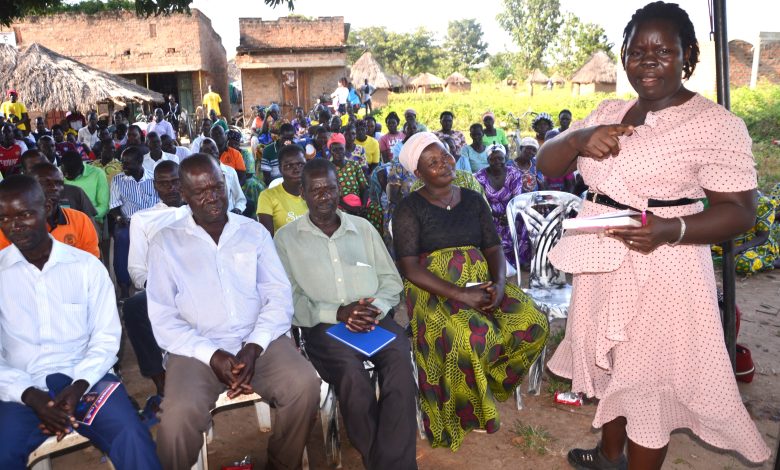
This concern was highlighted during a legal awareness session focused on property inheritance for widows, orphans, and widowers, organized by Redeem International at Aced-Ayapo trading centre in Abeko parish, Ogolai Sub County, Amuria District on Tuesday, November 18, 2026.
Beatrice Akello, head of the Child and Family Protection Unit at Amuria Central Police Station, reports an increase in domestic violence incidents tied to couples sleeping in separate beds.
She emphasized that such divisions have shattered family harmony, stunted development, and adversely influenced both education and economic stability.
Akello pointed out that children are often left vulnerable due to hostile family environments, leading some to frequent trade centers instead. This phenomenon arises when couples are at odds, primarily over their unmet intimate needs.
She noted that wives should not only be thought of as partners for bedtime companionship. It’s essential for husbands to show appreciation with special gifts—beyond what they might offer to children.
She suggested that a lack of such gestures could be contributing to women’s withdrawal from intimate relations.
Recent police statistics from Amuria Central Police Station reveal a significant spike in domestic violence cases, with 19 reported incidents between July 1 and July 24, 2026, compared to less than seven per month earlier in the year.
Detective Sgt. Stella Aliano, who oversees gender-related issues at Amuria Central Police, criticized some women for creating rifts by opting for separate beds. She pointed out that when men seek attention elsewhere after being pushed away, they often find themselves reported to the police.
“In this situation, many women are driving men out of their homes,” she remarked. “If you choose to sleep apart, knowing that intimacy was a significant part of your commitment, how can you expect support from your partner?”
Aliano recommended that wives desire simple, affordable tokens of affection, like sweets, which husbands can easily provide.
The rise in domestic violence has also contributed to an increase in defilement cases, as unstable homes fail to provide basic necessities, prompting children to seek out older individuals for material support, according to her.
Moses Alaba a resident of Ogolai Sub County said they separate the beds with their wives because sometimes the child is sick or the child is always urinating but they call the wife to their beds when it’s time for intimacy.
Stephen Acabi said when a wife gets a man friend outside and a man also pays back such acts by getting another lover, this always brings disagreements in families and it leads to separation of beds.
Sarah Acen, another resident said they separate beds with their husbands because their husbands have prioritized excessive drinking making them smell local brew ‘ajono’ and sometimes urinate on bed but they join their husbands when it’s time for intimacy.
Agero, a resident said most men eat their pork Muchomo from the trading centre leaving them and children suffering eating vegetables and this makes them separate beds because the husbands are smelling muchomo.
Immaculate Arabo, a widow, expressed her belief that sleeping apart fosters strife, rather than the unity that families need for positive development.
Stella Akello, the senior Assistant Chief Administrative Officer (SACAO) of Ogolai Sub County, noted that such cases are prevalent in their area, but they manage them and reference the more complex ones to district offices.
She praised Redeem International for their assistance and stated that when peace exists within the family, development and economic improvement will follow.
Robert Okwir the LC3 Chairperson Ogolai sub county advised couples to avoid denying each one their conjugal rights telling the husbands to play their responsibilities like educating children well.
According to the Uganda Police Force Annual Crime Report 2025 and official disclosures from the Uganda Police Force, police recorded 12,361 domestic violence victims and 208 domestic violence-related deaths in Uganda during 2025.

