
By Our Reporter
SERERE
The Uganda Human Rights Commission (UHRC) has warned clan leaders in the Teso region to discontinue the practice of physically punishing errant members, a method that has recently been reported as prevalent in this area.
This advisory comes in light of growing concerns that some clan leaders are utilizing cultural bylaws to administer corporal punishment.
The commission emphasizes that the anti-torture act explicitly prohibits any form of torture, and corporal punishment was outlawed long ago.
Those who engage in beating individuals under the guise of discipline are committing a criminal act and violating fundamental human rights.
Individuals involved in such actions could face arrest and prosecution if reported to law enforcement.
Officials from the commission acknowledge that they have received complaints about this issue in the past. However, they also noted that a lack of awareness among community members has led to underreporting, despite numerous discussions about these incidents on social media.
Josephine Akello, the regional human rights officer at the UHRC Soroti regional office, urged clan leaders in Teso to abandon physical punishment and explore alternative, non-violent methods of addressing misconduct.
Akello also raised a critical concern regarding the fishing communities in Teso, advising against the use of children in fishing activities. This practice violates Article 34, which mandates that all citizens protect children from any form of abuse, including child labor.
She cautioned that anyone who involves a child in fishing activities is effectively subjecting that child to labor exploitation, which could result in arrest and charges.
“It is essential to recognize that children should not be engaged in fishing when they should be in school, regardless of whether they are currently in school or not, as it poses significant risks to their safety. Communities must stop such practices,” she stressed.
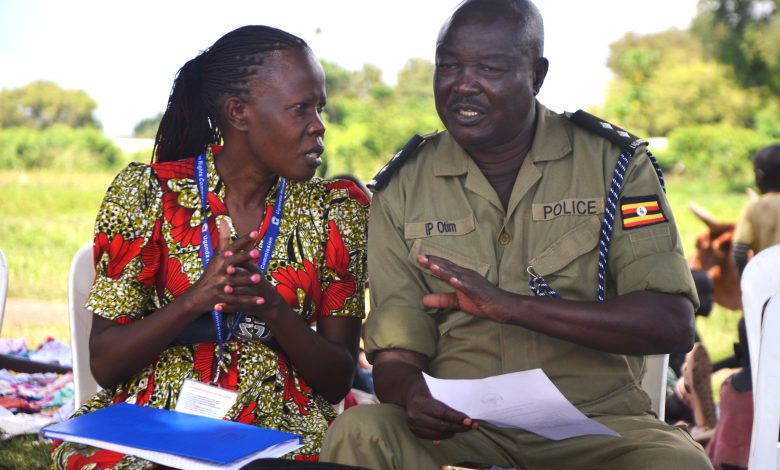
These issues were highlighted during a community engagement (baraza) organized by the UHRC Soroti regional office, aimed at addressing human rights concerns on November 20, 2026. The Karamojong landing site in Pingire Sub-County, Serere District was chosen for this discussion following reports of various human rights violations.
The issue of beating errant clan members came up following concerns raised by Fabiano Omagino, a clan leader, regarding the continued use of corporal punishment by some clans.
Robert Onyait, Senior Assistant Chief Administrative Officer (SACAO) of Pingire Sub County, pointed out that many clans’ bylaws promoting the beating of errant members are misaligned with the Ugandan Constitution.
He encouraged clans to seek legal guidance when formulating their bylaws and to review existing regulations to ensure they comply with national law. Instead of endorsing punitive measures, Onyait advocated for the establishment of more humane bylaws, suggesting small fines or charges as alternatives to corporal punishment.
The SACAO has observed that children’s involvement in fishing activities is prevalent in landing sites. Many parents in these areas own boats, and as children grow, they often assist in fishing, leading to a cycle where this practice continues.
On the subject of fishing, Onyait has urged parents to refrain from sending their children out to fish. Instead, he emphasizes the importance of education, noting that not all children from fishing families will follow in their parents’ footsteps; they have the potential to pursue different paths through schooling.
Joyce Christine Aluro, the LCV Vice Chairperson for Serere District, highlighted a troubling trend of school dropouts in landing sites. Beyond being used for fishing, these children sometimes engage in negative behaviors such as sexual abuse and marijuana use.
Aluro said the district authorities are actively working to educate them about the importance of steering clear of such activities.
Emmanuel Omagor, the LC1 Chairperson of the Karamojong landing site, reported ongoing efforts to apprehend and penalize children involved in fishing.
However, he stressed that the blame also lies with parents, who often over-rely on their children and keep them at home instead of encouraging their education.
Joseph Onyango, the chairperson from Chamodoko landing site in Pingire Sub County, revealed that some fishermen resort to illegal practices, such as using undersized fishing nets. These nets are often manipulated into smaller pieces and children are paid meager sums, like sh3,000 or sh4,000, to deploy them in Lake Kyoga without the parents’ awareness.
Onyango expressed concern that when these fishermen struggle to find co-fishermen, they exploit children instead.
Rose Aguti, a local resident, believes that the clan should take a firm stance against members who engage in theft, as it undermines the hard work of the community.
John Stephen Ejeku, another resident, pointed out that parents allowing their children to fish instead of attending school contributes to rising criminal activities, including opium use and violent altercations.
Martina Akiteng, a women’s leader in the community, noted that the recent community Barraza meetings are vital, as landing sites can attract individuals who have distanced themselves from their ancestral villages and ignored the guidance of clan leaders.
Elder Musa Alemu, at 74 years old, commented that the commission’s efforts have helped change the perspectives of many, especially concerning children’s rights to education rather than fishing.
Harriet Amoding, the acting District Community Development Officer for Serere, stressed that aside from parents, it is also the responsibility of LC1 Chairpersons to safeguard children’s rights and prevent any form of abuse.
During the engagement, concerns were raised about alleged human rights violations committed by UPDF marine officers.
Akello emphasized that these officers are meant to protect fishermen and prevent the use of illegal fishing gear. However, when fishermen fail to adhere to proper protocols, the officers should focus on making arrests and pursuing legal action, rather than resorting to beating or torture.
Individuals who believe their rights have been infringed are encouraged to reach out to the commission via the free toll line 0800144206 or through the UHRC Website App, as well as the new digital case management portal for filing complaints.
The commission’s Soroti regional office has announced plans to extend their outreach efforts to the Bugisu and Sebei subregions to promote human rights education.


