
By Weswa Ronnie
BUTALEJA
The Government of Uganda, through the Uganda Climate Smart Agriculture Transformation Project, has announced plans to support farmers interested in dairy farming at a small cost.
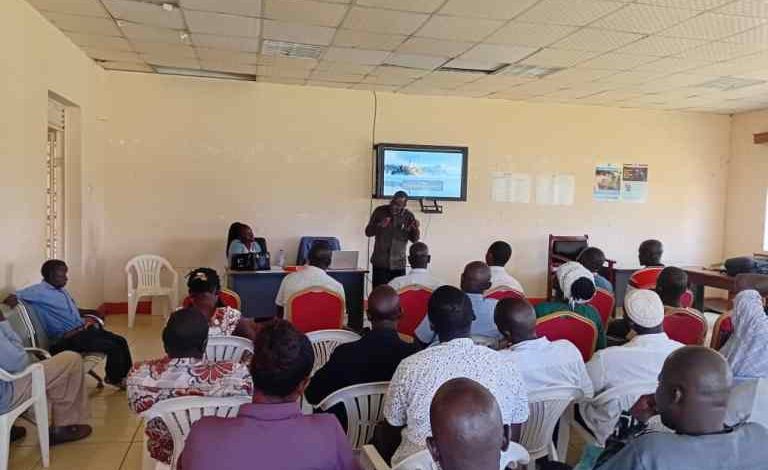
The announcement was made on Monday morning, 9th March, 2026, by James Higenyi, a staff at the Ministry of Agriculture, Animal Industry and Fisheries, during a meeting with farmer group leaders and Community Development Officers at the Butaleja Health Boardroom in Butaleja District.
Higenyi urged farmers to organize themselves into groups of 15 members each, noting that every individual member must own at least two heads of cattle and demonstrate experience in livestock farming to qualify for government support.
He also emphasized that group members should have genuine interest in dairy farming and avoid pursuing quick gains, stressing that the program is intended to promote sustainable development in the livestock sector.
Charles Swama, the District Agriculture Engineer for Butaleja, said the project is supported by the World Bank and is being implemented in only 69 districts out of the 145 districts that make up Uganda.
Swama explained that the project covers several agricultural value chains including livestock farming, fisheries, crop production, and insect farming.
He revealed that five sub-counties in Butaleja District have been selected to benefit from the dairy farming component of the program. These include Nawanjofu, Nabiganda, Naweyo, Busolwe Town Council, and Butaleja Town Council. A total of 45 farmer groups are expected to benefit.
According to Swama, the government will fund 80 percent of the required resources for the project, while farmers will contribute the remaining 20 percent as a co-funding arrangement through their groups.
He further noted that farmers will form cooperatives through which they will establish milk collection centers to ensure easier access to markets.
The District Veterinary Officer, Jackson Twebaze Ndahayo, advised farmers to set aside land for pasture growing in order to improve livestock productivity.
He also informed farmers that individuals will contribute at least 8,000 Ugandan shillings for the treatment of cows, while goats will be treated at a cost of 4,000 shillings.
Ndahayo explained that the government had previously been offering vaccinations free of charge, but farmers will now contribute a small fee to support animal health services.


