
By Our Reporter
SOROTI CITY
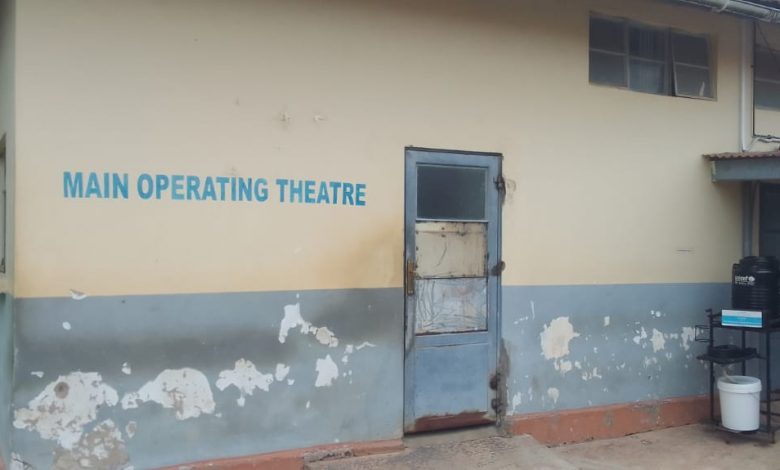
Soroti Regional Referral Hospital has temporarily stopped conducting major surgical procedures due to an electrical short-circuit in the main operating theater, raising concerns for the safety of staff and the integrity of new, state-of-the-art equipment.
Hospital officials reported that for the past two weeks, there have been ongoing electrical supply issues in the theater, attributed to the aging infrastructure that dates back to the hospital’s establishment in the 1920s.
The power lines connecting the main powerhouse to various hospital units have suffered deterioration over the years, which has notably impacted the theater’s functionality.
Despite attempts to rectify the situation, including repairs to both the socket and lighting, the theatre socket—which powers most surgical equipment—began to malfunction, posing risks of electrical shock to personnel around Mother’s Day (April 10th).
In an interview with the media on Monday, April 11th, 2026, Principal Hospital Administrator, Benzy Omoya confirmed that the hospital has ceased major operations temporarily to safeguard staff and protect the new equipment from potential damage.
Since Mother’s Day, patients in need of major surgeries have been referred to Princess Diana Memorial Health Centre IV, designated for Soroti City, while minor procedures continue to be conducted at the hospital. Princess Diana Memorial Health Centre IV is located approximately 2 kilometres from the heart of Soroti city along the Soroti-Moroto highway.
“We are coordinating with our colleagues at Princess Diana Health Centre IV to facilitate surgeries at their site,” Omoya stated.
He added that the hospital is dispatching patients along with necessary materials and human resources, particularly surgeons, to ensure continuity of care.
“At present, we have a number of patients ready to be transferred for major operations at Diana, and after their post-operative care, we will bring them back here for further management,” he explained.
Omoya stressed that although major operations are on hold, minor procedures remain unaffected as the hospital works diligently to resolve the electrical issues.
Management is actively engaging with the service provider and the hospital’s technical team of medical engineers to expedite the restoration of safe electrical conditions; an effort they hope will take approximately two days to complete.
“We will need materials and wires to address this issue, and it may require excavation to replace the faulty cables causing the short circuit. We suspect the problem lies somewhere between the theatre and the powerhouse, so we need to install new heavy-duty cables,” he noted.
For years, the hospital administration has been advocating for a comprehensive overhaul of the theatre, as well as the construction of a new facility that can accommodate the growing demands of a population now exceeding 2.5 million. The current theatre, which was built more than 70 years ago, is simply inadequate, only able to house two theatre tables.
“At one point, we faced a serious situation and had to borrow a bed from Moroto Regional Hospital. We have between 13 and 15 surgeons ready to work, but they can’t operate outside under a tree,” he lamented.
Omoya reflects on how much longer the hospital will continue in its current dire state. Despite reaching out to various stakeholders, politicians, and technical teams, the issue remains largely ignored.
“If something were to happen here tomorrow—like an electrical shock that harms our staff—management would be held accountable, even though they are fully aware of the issues we face,” he expressed.
He emphasized that the hospital is becoming increasingly hazardous for staff, particularly due to widespread electrical leakage that poses a threat of electrocution. “Yet, the same individuals who hold us accountable will turn around and criticize us without acknowledging the dangerous conditions we are dealing with. We’re exhausted by this lack of support,” he said.
According to him, it seems there is little concern for the hospital’s well-being. High-ranking officials from Teso and the Government have visited to assess the situation, but their visits have not led to any real solutions.
The management is hamstrung by limited resources, hindering their ability to maintain facilities while facing public expectation for high-quality service. “It’s like trying to milk a cow without feeding it,” he stated.
While there are talks about relocating to Soroti University, progress is slow. “By now, we would have hoped that some generous individuals would have started constructing necessary facilities on the land the university has generously allocated to us,” he noted.
The hospital’s leadership has pointed out that, thanks to the Japanese International Cooperation Agency (JICA), they now possess state-of-the-art equipment across various units—but lack the space to properly install these advancements, including in the theatre, dental rooms, and the accident and emergency department.
“Despite these challenges, people still expect us to perform miracles to keep this hospital operational. It’s simply not feasible,” he lamented.
The management appeals to those who care about the hospital to step forward and provide support, as the voices of those who matter seem to be falling on deaf ears.
Patients and attendants who brought to the media’s attention this concerning issue described the situation as alarming, as it leads to wasted time and resources when being referred to another health facility located about two kilometers from the town center.
Capt. Mike Mukula, the former NRM party vice chairperson for the Eastern Region, underscored the severity of the theatre’s breakdown and its detrimental impact on the health sector in Teso, stressing the need for surgical services to be accessible to the community.
Soroti Regional Referral Hospital was established in the mid-1920s, initially functioning as a syphilis treatment center. It later became a district hospital in 1978 and was officially elevated to a Regional Referral Hospital in 1996. Many of the current facilities date back to the 1940s.


