
By Delux Emmy Alomu
KAPELEBYONG
In March this year, 32-year-old Sarah Apio from Onganyakonye village in Kapelebyong sub-County faced a devastating miscarriage at six months pregnant.
“I began to feel unwell. It felt like flu or malaria around 7:00 PM, but I didn’t think much of it. By 10:00 PM, my condition worsened, and suddenly, I was bleeding. Panic set in. I told my husband I needed to see a doctor, but he hesitated. When he saw the blood, he quickly grabbed his bicycle and rushed me to Kapelebyong Health Centre IV, which is only about 2 kilometers from our home,” she recalls.
Upon arrival at the health centre, blood streaming down her legs, Apio received immediate attention from the midwives. This facility is the largest in the district.
“At the health centre, they administered pain relief. The midwives instructed my husband to buy medication to stop the bleeding, and he complied. After that, I received two injections, but the bleeding persisted. Eventually, it subsided, and I underwent a manual vacuum aspiration (MVA) procedure. This procedure uses an MVA kit to remove any remaining tissue from the uterus,” Apio explains.
Although she was uncertain about the exact cause of her miscarriage, she mentioned having suffered from severe malaria and a urinary tract infection just days before the tragic event.
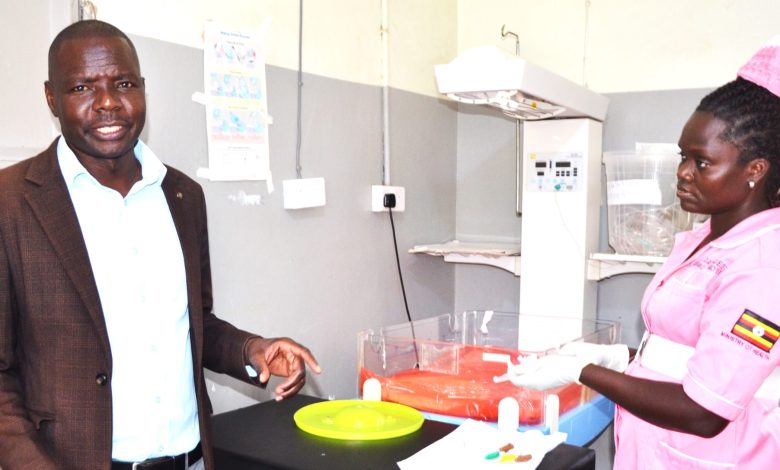
Dr. James Eudu, the district health officer, emphasizes that efforts to enhance maternal healthcare are underway, and the health centre is now better equipped to manage such emergencies.
He notes that many mothers in the district experience miscarriages, abortions, and postpartum hemorrhage, which can be fatal if not treated appropriately.
Dr. Eudu warns that many women are turning to herbal remedies for maternal health issues, especially after childbirth, miscarriages, or abortions. However, these alternatives can pose significant risks if not managed by professionals.
“If a miscarriage or abortion is not managed properly, bacteria can enter the uterus, leading to endometritis or severe infection. If left untreated, this can escalate into sepsis, a medical emergency. Neglecting an infection or retained tissue increases the risk of scarring in the uterus, which can adversely affect future fertility,” Dr. Eudu cautions.
He urges young women and girls to avoid unsafe abortion practices, especially involving herbs and sharp objects, warning that these methods can lead to death or infertility.
“For all reproductive health issues, please consult a qualified healthcare provider,” Dr. Eudu advises.
Thanks to awareness campaigns, he reports that more women are seeking services at health centres.
“Many mothers are accessing health centres for childbirth. Some arrive with complications from incomplete abortions and miscarriages, with some being brought in unconscious. In our district, we’ve seen a notable rise in mothers seeking assistance after experiencing such events, with around ten cases reported each month over the past two months. We strive to provide them with the best care possible,” Eudu states.
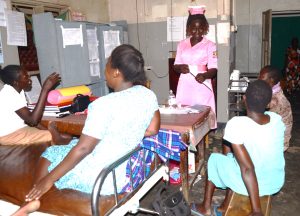
Lydia Atiko, a senior midwife at Kapelebyong Health Centre IV, highlights that the facility has a dedicated space for various types of maternal care, tailored to the level of urgency. The centre features an operating theatre and a maternity ward with 25 beds.
She mentions that they record approximately 150 to 190 normal deliveries and over 50 C-sections monthly. “Here, we offer essential services including antenatal care, delivery, emergency C-sections, counselling, family planning, and preventive care. For those needing post-miscarriage care, we administer pain relief before performing the MVA procedure to remove any retained tissue from the uterus,” she explains.
Atiko urges women not to suffer in silence but to seek the medical help they need. However, she emphasizes that the health centre is currently overstretched.
Founded in 1954 as a dispensary, the health centre now caters to a population of 143,000, including individuals from neighboring districts such as Abim, Otuke, and Napak. Currently, there are only four enrolled midwives, well below the eight recommended, responsible for crucial services like antenatal care, deliveries, immunizations, and post-abortion care. With one midwife soon going on maternity leave, the facility will be left with just three midwives to manage these vital services.
Dr. Eudu points out that the entire district requires 55 enrolled midwives, but there are only 18 available. “Our midwives have to work continuously without days off.”
In the labor suite, there are three delivery beds available, but the midwives can only use one for uterine evacuations instead of the recommended three. “There are times when we have three mothers needing post-miscarriage or abortion care, but currently, two must wait until one is treated. We simply don’t have enough beds,” a medic remarked.
Francis Edison Echodu, Deputy Prime Minister of the Iteso Cultural Union, encourages women and girls to seek medical support if they face any pregnancy complications. “In the past, many relied on traditional remedies due to a lack of health facilities. Now that we have access to health services, don’t suffer in silence,” he urges.
Dr. Simon Peter Kayondo, an obstetrics and gynecology expert in Kampala, notes that while progress has been made in reducing maternal deaths, Uganda is still facing significant challenges.
“Uganda has made strides in reducing maternal deaths, yet several challenges remain. Many teenage mothers face unplanned pregnancies, leading to tragic outcomes. While some lose their lives during childbirth, others experience severe complications from unsafe abortions. Due to the illegality of abortion in Uganda, many resort to dangerous methods involving herbs and sharp objects. Unfortunately, there are numerous unqualified practitioners who perform these procedures in unsafe conditions. There is a pressing need for awareness and education,” he states.
Kayondo also emphasizes the necessity for enhanced medical support. “Aftercare for these young women should be accessible to everyone, starting from Health Centre III, regardless of the circumstances surrounding their abortion, as Ugandan law only permits abortion under specific conditions for safeguarding a woman’s life.”
National rate
Uganda’s maternal mortality rate has fluctuated over recent years. The Uganda Health and Demographic Survey reported 209 deaths per 100,000 live births in 2020, rising to 216 in 2021. The rate fell to 184 in 2022 and further to 170 in 2023. Institutional maternal mortality dropped to 69 per 100,000 live births in 2024/25. Leading causes of maternal deaths remain postpartum haemorrhage, high blood pressure, unsafe abortions, and infections.
Globally, sub-Saharan Africa accounts for 70% of maternal deaths, with an estimated 260,000 women dying during childbirth in 2023. Uganda’s maternal mortality rate in East Africa stands at 69 deaths per 100,000 live births, compared to 149 in Kenya.


