
By Reporter
NAMISINDWA
In the rolling hills of Namisindwa district, a pregnant mother in labor no longer faces a perilous three-hour journey on the back of a boda boda to reach the nearest health centre. Instead, with a simple phone call, a Moto-Ambulance is dispatched to her doorstep within minutes.
This is the reality of healthcare delivery in rural Uganda today, thanks to a transformative telemedicine initiative that is redefining access to medical services in some of the country’s most isolated communities.
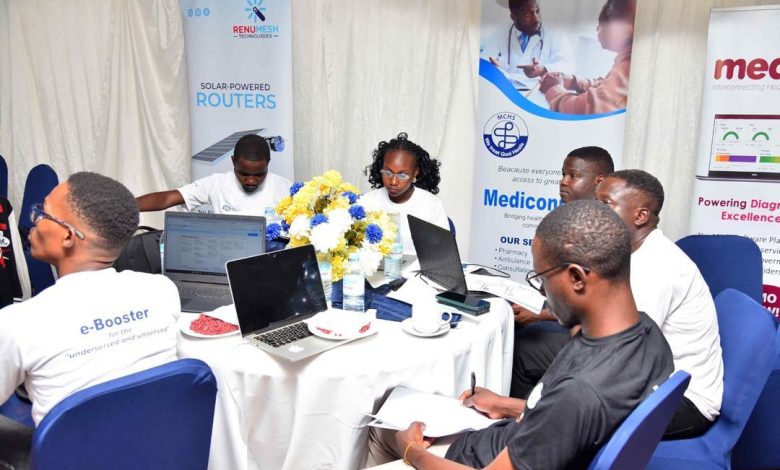
Mediconnect Health Solutions (MCHS), a tech-driven health platform implemented by Apsel Investments Ltd, has successfully completed its first phase of operations, connecting over 5,800 residents in the districts of Kayunga and Namisindwa to quality healthcare.
The initiative, backed by the Uganda Communications Commission (UCC) through the E-Booster 2.0 programme, is proving that digital tools, community-based responders, and strategic partnerships can effectively bridge the healthcare gap in underserved areas.
“Before Mediconnect, many of our people would die before they could even reach a hospital,” says Sarah Nabwire, a Village Health Team (VHT) member in Namisindwa district who was trained under the programme.
“Now, we can call, get advice, and arrange transport for emergencies. It has given us hope.”
A Multi-Channel Lifeline
The project addresses a fundamental challenge: how to deliver healthcare to populations where smartphone penetration is low and internet connectivity remains unreliable. Mediconnect’s solution is a hybrid approach that meets people where they are. The platform offers a toll-free call center, a USSD code, a mobile app, and a website, ensuring that every community member, regardless of their technological literacy, can access a health worker.
Data from the Phase 1 completion report reveals that USSD adoption outpaced mobile app usage by a 4:1 ratio, validating the strategy of prioritizing low-barrier access channels. This has been a lifeline for rural households, with the platform recording 3,247 calls and 8,432 unique USSD sessions in just six months.
“We realized early on that if we wanted to serve the rural poor, we could not rely on smartphones alone,” explains Michael Koyola, CEO of Apsel Investments Ltd. “We had to design a system that works for everyone, from the farmer in the garden to the mother at home. That is why we put USSD, toll-free lines, and a network of trained community responders at the heart of this project.”
By the Numbers: A Story of Success
The numbers from Phase 1 tell a compelling story of impact. The project not only met but exceeded nearly all its targets.
5,847 registered users, surpassing the 5,000 target, 2,894 completed medical consultations, 623 emergency requests responded to via ambulance and boda-boda networks.
270 healthcare and support personnel trained, including 170 VHTs, 68 boda- boda riders, and 24 pharmacy staff, 1,156 pharmacy deliveries completed, ensuring medicines reach remote households, 99.2% platform uptime, ensuring the system is always available when needed.
Perhaps the most striking success story is the Moto-Ambulance network, which has become a critical component of emergency response. Boda-boda riders, equipped with branded vests and trained in emergency protocols, have handled 237 emergency requests, reaching remote areas within 15 minutes. In Namisindwa, where road conditions can be treacherous, these riders are often the difference between life and death.
“Time is everything in an emergency,” says John Musumba, a boda-boda rider trained under the programme. “Before, we would just rush people to the hospital without any training. Now, we know how to stabilize a patient, we have the right equipment, and we know which facility to go to. We are saving lives.”
The Challenge of Distance and Supply Chains
While the project has achieved remarkable success, it has not been without challenges.
Poor road conditions have been a major challenge. To address this, the project plans to deploy additional Moto-Ambulances in Namisindwa during Phase 2.
Another challenge is the supply chain for medicines. This has led to a plan to enroll district-level pharmacy hubs with buffer stocks to ensure that medicines are available when and where they are needed.
“We have learned a great deal in these first six months,” says Koyola. “We have seen what works and where we need to improve. The disparity in response times and the pharmacy stockouts are issues we are determined to solve. They are not failures; they are lessons that will make Phase 2 even more effective.”
A Model for the Nation
The success of Mediconnect is not just about numbers; it is about the stories of lives saved. The project has documented 15 case studies showcasing how timely intervention has prevented complications, reduced travel costs, and alleviated the financial burden on families. By reducing the need for travel, the programme has also prevented lost workdays and allowed patients to seek care earlier, avoiding costly late-stage treatments.
Beyond health outcomes, Mediconnect is generating economic activity. The programme is projected to create over 5,000 jobs through the boda ambulance network, pharmacy partnerships, and digital support roles. Pharmacies and drug shops in the pilot districts have reported increased sales, while the referral programme, which has generated 2,147 new users, has fostered community ownership and trust.
“I was initially skeptical,” admits Hajji Abdu Nsubuga, a Local Council leader in Kayunga. “But when I saw our people getting help so quickly, I became a believer. This is the kind of innovation we need. It is not just about technology; it is about community, and Mediconnect has brought our community together to solve a problem that has plagued us for decades.”
The Road Ahead: Phase 2
Building on this momentum, Mediconnect is launching Phase 2, with a focus on scaling the model to additional districts, strengthening the pharmacy supply chain, and introducing a premium service tier to ensure long-term financial sustainability. A loyalty programme is also planned to improve user retention, as only 25% of users have returned for repeat consultations.
The project also aims to integrate with the Ministry of Health’s District Health Information System (DHIS2), a move that would strengthen national health intelligence and allow for real-time disease surveillance on a larger scale.
“The potential of this model is immense,” says a UCC official who has been monitoring the project. “Mediconnect has demonstrated that with the right combination of technology, training, and community engagement, we can extend quality healthcare to places that have long been left out. This is not just a pilot project; it is a blueprint for the future of rural healthcare in Uganda.”
A Lasting Legacy
For the families in Kayunga and Namisindwa, the impact of Mediconnect is personal. It is the mother who delivered safely, the child who received medicine on time, and the elderly man who avoided a costly journey to the city. It is healthcare that arrives when it is needed most.
As the project prepares to expand, Mediconnect’s combination of gadget distribution, training, and transport improvement has created a replicable model for other hard-to- reach districts. The digital revolution has finally arrived in rural Uganda, and it is saving lives, creating jobs, and offering hope to communities that have been underserved for generations.
“When we started, we asked ourselves: how do we make healthcare accessible to everyone, not just the privileged few?” reflects Koyola. “The answer is not just in technology, but in people. The VHTs, the boda riders, the pharmacy staff—they are the heart of this solution. And with the support of UCC and our partners, we are proving that change is possible.”
For more information, visit: www.mediconnect.ug


