
By Richard Onapatum
KARAMOJA
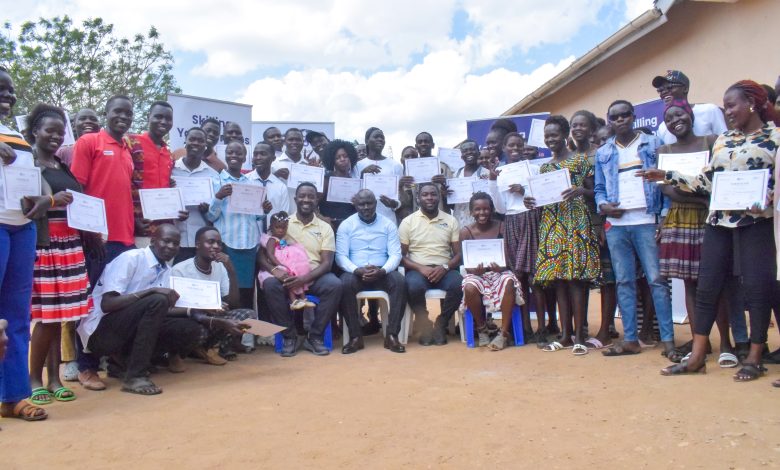
Communities in Karamoja have been urged to take ownership of their food systems by strengthening local seed production rather than relying entirely on external distributors. The call came from Ogwaria Moses, Project Officer for Food Security and Livelihoods, during a two-day validation workshop in Kotido under the FAO-funded Improving Food Security and Resilience of Food Production Systems in Karamoja (FOSTER) project.
“If we continue to depend on outside seed suppliers, our resilience will always be fragile,” Ogwaria warned. “We must invest in our own seed systems, rooted in local knowledge and adapted to Karamoja’s climate.” His remarks set the tone for the workshop, which brought together district officials, extension workers, farmer groups, NGOs, and community leaders from across the four districts of north Karamoja.
The workshop, convened by Diocesan Development Services – North Karamoja (DDS NK) with technical support from Makerere University, focused on the state of agricultural extension and advisory services. Experts highlighted gaps in coverage, quality, and inclusivity. Dr. Rebecca Mukebezi analyzed farming systems in Karamoja, stressing that interventions must respect cultural practices while introducing innovations that improve resilience. Dr. Naris Mubangizi called for a pluralistic system where state and non-state actors complement each other, while Dr. Prossy Isubikalu emphasized participatory approaches such as Farmer Field Schools, empowering communities to learn by doing rather than relying on top-down instruction.
According to district agricultural reports, fewer than 35 percent of households in Karamoja currently access extension services, leaving most farmers without timely advice or support. Farmers and input dealers shared testimonies that underscored the urgency of reform. A farmer longoli Romano explained: “When seeds arrive late, we miss the rains, and the harvest fails before it even begins. “We want to be part of the solution, not just observers. Extension services must speak our language and use tools we understand.” Participants also highlighted the low education levels among farmers, which limit their ability to adopt new technologies, and called for skilling programs tailored to practical agricultural realities.
Leadership voices reinforced the collaborative spirit of the workshop. Canon Ijala Simon Peter, Director of DDS NK, underscored the importance of partnerships, saying, “The success of extension services depends on the active involvement of both government and non-state actors, working hand in hand with communities.” Deputy RDC Magyezi John Lukooki closed the workshop with a call to action: “We must move beyond identifying challenges to implementing solutions that empower farmers, youth, and women. The responsibility lies with all of us to ensure extension services reach every corner of Karamoja.”
Officials from the Ministry of Agriculture, Animal Industry and Fisheries (MAAIF) stressed alignment with national policies. Mugume R. Stephen emphasized that extension services in Karamoja must integrate with the broader national framework to build resilience and ensure equal quality of services. Assistant Commissioner Lodingokol John highlighted the need for responsive, transparent, and innovative extension systems that help farmers adapt to climate change, adding that FAO and DDS NK are key partners in making these reforms felt on the ground.
The workshop also explored broader issues affecting Karamoja’s agriculture: climate change, crop diversification, market access, women’s empowerment, agricultural skilling, and cross-border resource utilization. Experts warned that climate variability is intensifying the need for locally adapted seeds and responsive extension services, with Dr. Mukebezi noting, “Climate shocks are no longer occasional—they are constant. Extension services must prepare farmers to adapt, diversify, and innovate.”
Discussions linked local realities to national frameworks, with Uganda’s National Agricultural Extension Policy emphasizing pluralism, inclusivity, and sustainability. Participants noted that the Parish Development Model, currently rolled out nationwide, could benefit from lessons learned in Karamoja, particularly around community ownership and resilience.
The workshop validated findings and proposed strategies to transform extension services and agro-input supply systems in the region, producing a detailed report on current models, a draft strategy for reform, and an integrated Farmer Field School training manual for community-based facilitators. Stakeholders agreed that without stronger local seed systems, inclusive extension services, crop diversification, market access, and accountability at all levels, Karamoja’s resilience will remain fragile.
As Ogwaria Moses reminded participants, true resilience begins with communities taking charge of their food systems. Deputy RDC Lukooki concluded: “The responsibility lies with all of us.”


