
By Sadique Bamwita
KAMPALA
The Electoral Commission has set new polling dates for Special Interest groups. Among the Special Interest groups include ; youth , old persons, people with disabilities and workers’ MPs.
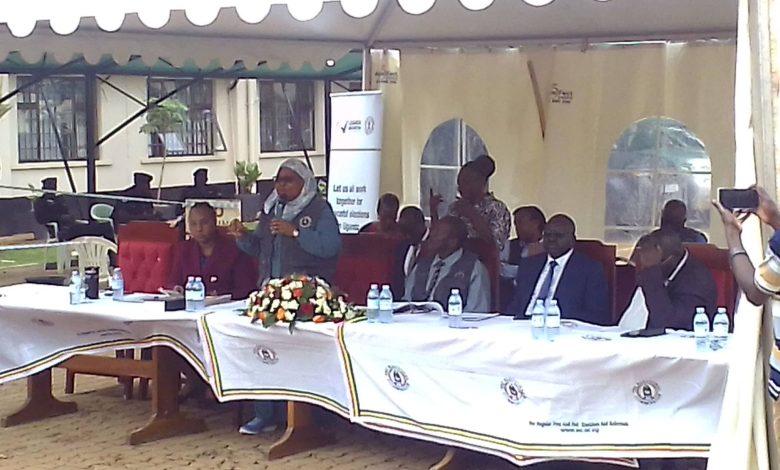
The Vice Chairperson of the Electoral Commission, Hajat Aisha Lubega says adjustments have been made to enable members of the special interest groups to participate in the General Elections (universal adult suffrage) and also to effectively participate in their respective Electoral College elections.
She, however emphasized that the polling dates for the other elective positions remain unchanged, as per the Schedule issued earlier by the Electoral Commission.
Hajat Aisha Lubega broke down the polling new dates for Special Interest groups as follows;
“National Conference for Election of Persons with Disabilities (PWDs) Representatives to Parliament changed from 19th January 2026 to 3rd February 2026
‘Election of Councillors representing Special Interest Groups (Youths; Older Persons; and PWDs) at Sub County/Town/Municipal Division changed from 19th January 2026 to 30th January 2026
National Conference for Election of Workers Representatives to Parliament adjusted from 21st January 2026 to 19th January 2026
‘National Conference for Election of National Female Youth Representative to Parliament changed from 28th January 2026 to 6th February 2026.
‘Regional Conferences for Election of Regional Youths Representatives to Parliament changed from 6th February 2026 to 28th January 2026.’
Regarding Issuance of Voter Location Slips, Hajat Aisha Lubega said the Electoral Commission has commenced the exercise of issuing Voter Location Slips (VLS) to voters across the country to enable them conveniently locate their respective polling stations on polling day.
“The issuance exercise commenced on 15th December 2025, and will be concluded on 13th January 2026.
‘The Voters Location Slip will be issued at each Parish/Ward across the country, as per the schedule issued by the respective Parish/Ward Supervisor.
‘The Voters Location Slip is a response by the Electoral Commission to complaints raised in the past elections, where some voters reported difficulty in locating their polling stations.
‘It bears the particulars of a voter, namely: photograph, names, date of birth, and location (that is, the district/city, constituency, Sub County, parish and polling station).
‘It also bears a unique barcode which will be read by the Biometric Voter Verification machines which will be deployed at all polling stations across the country.
Hajat Aisha Lubega continued: “The Voters Location Slip will be used by voters at four rounds of elections during the General Elections 2026 namely: Presidential/Parliamentary, District/City Chairpersons and Councillors, Municipality/City Division Chairpersons and Councilors; and, Sub county/Town/Municipal Division Chairpersons and Councillors elections.
‘ I wish to emphasize that this Voter location slip (VLS) is free of charge and should only be picked by the voter in person from the Parish/Ward Supervisor who is an employee of the Commission.
‘The Commission calls upon all registered voters to collect their Voter Location Slips from their respective Parish Headquarters. Voters are further advised to carefully secure their Voter Location Slips, so that the barcode is not tampered with, “Hajat Aisha Lubega appealed to voters.
‘Please note that only a person whose particulars appear on the Voters Register will be issued a Voters Location Slip during this issuance exercise. ‘
On the issue of deployment of the Biometric Voter Verification Kits (BVVK) during the 2026 Elections, Hajat Aisha Lubega revealed that the Commission acquired 109,142 Biometric Voter Verification Kits (BVVK) which will be deployed for the 2025/2026 General Elections, as a measure aimed at improving the management and conduct of elections through authentication of voter identity.
“The BVVK basically uses fingerprints and facial recognition to match voter details which will help the Presiding Officer to confirm the identity of the voter as being the one on the Voters Register of that particular polling station, ” Hajat Aisha Lubega explained adding that the system will enable the Commission to ensure that only registered persons vote during the elections and that such persons (voters) do not vote more than once for the same election, hence it will help the Commission achieve the One-Man/Woman-One Vote principle.
‘The Commission is progressing with the training of the officials who will operate the kits during the elections, from the national level to the polling station level.’
In her conclusion, Hajat Aisha Lubega explained why the Electoral Commission specifically invited journalists to participate in a public demonstration of the Biometric Voter Verification Kit.
“The purpose of this demonstration is to:
-Sensitize stakeholders on polling day procedures and the use of the Biometric Voter Verification Kit.
-Demonstrate how voters are identified and verified using biometric and facial recognition technology.
-Build confidence, transparency, and trust in the voter verification process.
-Allow stakeholders to observe, participate, and ask questions on the system’s functionality.
-Clarify safeguards in place to prevent multiple voting, impersonation, and other electoral malpractices.
-Promote understanding of how technology enhances the credibility, integrity, and efficiency of the election.’


