
By Delux Emmy Alomu
AMURIA
Health officials in Amuria District are sounding the alarm over a healthcare crisis driven by dangerously low staffing levels and excessive working hours in public health facilities. These challenges not only impact the well-being of healthcare workers but also compromise the quality of medical services provided to patients.
The shortage of healthcare personnel in the district is becoming increasingly severe, especially as patient visits continue to rise, putting additional stress on community health.
Current statistics reveal that staffing levels are operating at a mere 23% of the target set by the Ministry of Health, creating a significant shortfall that jeopardizes service delivery and leaves many community members at risk.
At Amuria General Hospital, staffing levels are even more concerning, with only 19% of positions filled.
Godfrey Opolot, the Acting District Health Officer (DHO) for Amuria, shared that the hospital only has six doctors—three stationed at Amuria General Hospital and two at the newly opened Wera Health Centre IV. Alarmingly, the General hospital lacks a surgeon, with the highest-ranking medical professional being a senior medical officer.
Due to the inadequate staffing, health workers are finding themselves working more than the standard eight-hour shifts, resulting in mounting health issues stemming from overwork.
Despite recently advertising for the recruitment of 30 nurses, midwives, and clinical officers, the staffing crisis remains critical because of budget constraints.
Opolot called on both the Ministry of Health and the Ministry of Finance to allocate adequate funding to allow for the recruitment of essential personnel who can provide quality healthcare to the citizens of Amuria.
“With these critical positions filled, we could at least ensure a baseline level of healthcare for our communities,” he stated.
Key positions needed in the district include midwives, enrolled nurses, clinical officers, medical officers, and laboratory personnel, according to Opolot.
Amuria District is comprised of 18 sub-counties and town councils that house 17 health facilities, including one general hospital (Amuria), a health centre IV (Wera), nine health centre IIIs, and six health centre IIs—many of which require upgrading.
He noted that six sub-counties currently lack health centre IIIs as mandated by government policy, forcing some residents to travel beyond the recommended five kilometers to reach the nearest facility.
The bed occupancy rate is alarmingly low, with only 11 beds available at Abarilela Health Centre III, despite common illnesses like malaria, cough, pneumonia, and urinary tract infections consistently ranking among the leading health challenges and causes of morbidity in the area.
Silvester Ogwade, a resident of Abarilela sub-county, expressed his worry about the high number of health workers, including the District Health Officer, who are in acting roles. He believes this situation is impacting service delivery in the district. Another local resident pointed out the government’s tendency to send fewer essential medicines while supplying a large quantity of condoms.
Martin Opio, the health in-charge at Abarilela H/C3, reported that they see nearly 100 patients daily in the outpatient department.
Similarly, Betty Asio, the in-charge of the maternity ward at the same facility, highlighted the overcrowding of mothers, a lack of space in the waiting area, and only one delivery couch, which sometimes forces them to assist in deliveries on the floor.
Paul Eseru, the Amuria Resident District Commissioner, mentioned that the district was initially hindered by a recruitment ban. He noted that the wage bill has compounded this issue. The district has been in discussions with the central government, particularly the Office of the Prime Minister, to address these challenges and improve service delivery.
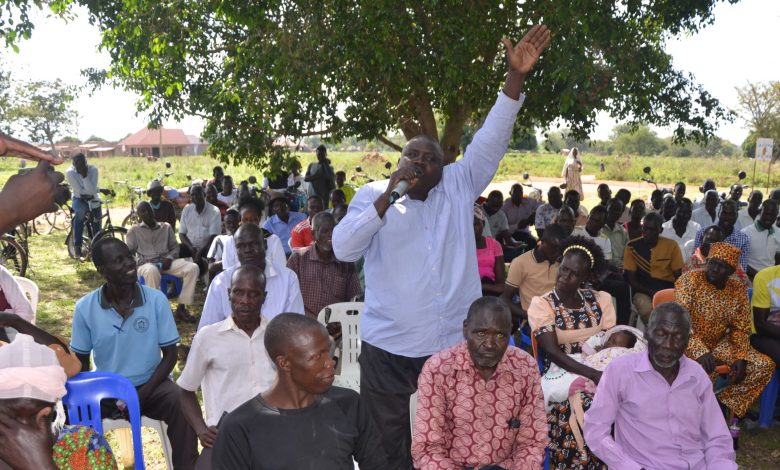
During the recent district baraza meeting at Abarilela sub county headquarters, John Kalule, the Commissioner for Monitoring and Evaluation in charge of agencies, NGOs, and public institutions at the OPM, stated that they would pursue the issue of staffing gaps with the Ministry of Health to ensure action is taken.
He requested the district chief administrative officer to provide an overview report of Amuria’s health units so these concerns can be escalated to the appropriate ministries.
The 2024 Local Government Management of Service Delivery (LGMSD) Assessment ranked Amuria District as the 58th worst-performing local government out of 176, with a score of 69.45%.
The government acknowledged persistent service delivery gaps, particularly regarding unfilled critical positions.


