
By Our Reporter
NATIONAL
Ministers designate will be vetted by the Appointments Committee of Parliament starting Monday, 01 June 2026.
Appointed by the President Yoweri Museveni mid-week, the ministers designate are expected to interact with the committee chaired by the Speaker and deputised by the Deputy Speaker.
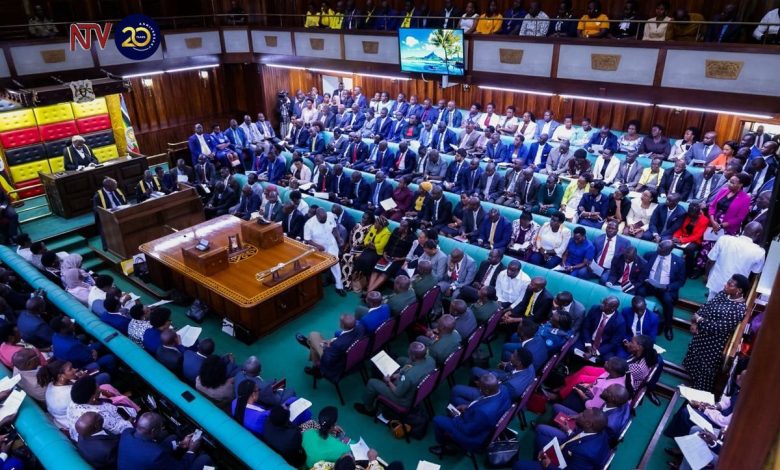
The Appointments Committee was constituted during the plenary sitting on Thursday, 28 May 2026 chaired by Speaker Jacob Marksons Oboth.
Other members of the committee include the Leader of the Opposition in Parliament, Hon. Joel Ssenyonyi among others selected from across the political divide.
Prior to the much anticipated vetting, the House during the Thursday plenary, the second of the 12th Parliament, also approved an increment of cabinet ministers and ministers of state to 30 and 51 respectively, in consideration of Articles 113(2) and 114(3) of the Constitution of Uganda.
According to the constitutional provisions, Parliamentary approval is required to increase the number of cabinet ministers and other ministers (state ministers) beyond the statutory 21 officials.
The approval follows a motion moved by the Prime Minister, Robinah Nabbanja, who herself and the Vice-President, Jessica Alupo, had earlier been approved for their positions by the House.
“For the efficient running of the State, the President has determined that there is need to increase the total number of Cabinet Ministers from twenty-one to thirty, and the total number of Other Ministers from 21 to 51,” Nabbanja noted.
She added that the country’s population growth has posed new governance demands, thus necessitating an increase in the ministerial portfolio to match service delivery and equitable representation.
“Flagship programmes such as the parish development model, EMYOGA initiative and climate resilience strategies require dedicated ministerial oversight to ensure effective implementation. Specialized portfolios are needed to coordinate cross-cutting programmes, monitor government performance and guarantee accountability at grassroots level. Under service delivery and efficiency, more ministers allow specialisation, clear mandates and stronger oversight,” Nabbanja added.
The motion to vary the number of ministers was seconded by Kyaka South County MP, Hon. Jackson Kafuuzi, the Deputy Attorney General designate.
He noted that Parliament’s approval presents as a dual safeguard to ensure accountability and prevent automatic inflation of cabinet numbers.
“The framers of the constitution anticipated evolving governance needs and deliberately vested parliament with the authority to approve the adjustments. This is not a departure from the law, but its faithful application,” Kafuuzi said.
However, a section of MPs challenged the motion, urging the House to stay it and task government to align the number of cabinet positions with the provisions of Articles 113(2) and 114(3) of the Constitution.
“If there is any governance gap that has been created, it can be fixed by the local leaders. I want to appeal to colleagues that for the first time in the history of this country, let us stay this motion and try out the number of ministers as given in the constitution,” said Hon. Betty Nambooze (NUP, Mukono Municipality).
“The framers of the constitution defined these numbers and government has not moved to amend these provisions. Actually, when we reduce their number, it is in their interest that we are finding more money for service delivery. Let us maintain the numbers as they are in the constitution and we see how it how it works out,” Hon. Paul Mwiru, the Chief Opposition Whip, proposed.
Kassanda County North MP, Hon. Patrick Nsamba, alluded to the recent rationalisation of agencies and urged government to reduce the number of ministers in the same vein.
Hon. Nambooze told MPs that any governance gap that had been created could be fixed by the local leaders. The premier, however, clarified that the proposed number of ministers has not changed, as per the ministry portfolios provided.
“The number of ministers and ministers of state that have been carrying out duties is the same number we have brought. The rationalisation process was carried out because there was duplication of work in departments and agencies associated with different ministries,” Nabbanja noted.
The other 30 standing and sectoral committees of the House will be constituted in due course.


