
By Our Reporter
NATIONAL
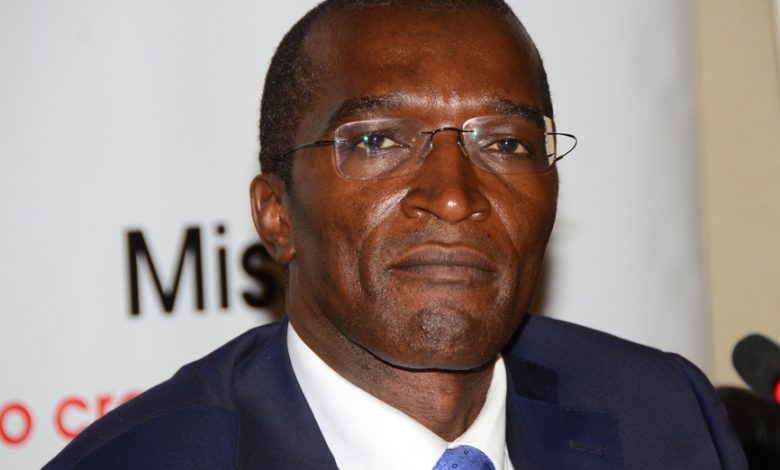
The Auditor General has faulted Insurance Regulatory Authority (IRA) chief executive officer, Ibrahim Kaddunabbi Lubega, over a string of financial and administrative irregularities involving salary increments, leave payments, foreign travel allowances, and recruitment decisions at the insurance sector regulator.
In a May 2026 special forensic investigation report, Auditor General Edward Akol concludes that Kadunabbi irregularly benefited from or authorised payments and decisions that did not fully comply with IRA’s internal policies, his instrument of appointment, the Employment Act, and guidance from the Minister of Finance, Planning and Economic Development.
At the heart of the report are three major quantified findings: UGX36.832 million in irregular leave allowance, UGX87.179 million paid as leave compensation for untaken leave, and UGX57.436 million in financial loss arising from per diem payments linked to Africa Reinsurance Corporation board activities. Combined, the three findings amount to approximately UGX181.4 million.
The report also raises questions over recruitment decisions that allegedly resulted in additional unplanned staff costs estimated by the internal auditor at UGX647.551 million over 13 months. In a separate communication cited in the report, the IRA Board Chairperson reportedly put the recurrent staff expenditure impact at UGX654.75 million.
The investigation was commissioned after the Permanent Secretary and Secretary to the Treasury wrote to the Auditor General on March 19, 2026, requesting a comprehensive review of allegations of financial mismanagement by the IRA CEO.
The Auditor General was asked to establish whether allegations of abuse of office and misappropriation or embezzlement of public funds were true, and whether IRA suffered financial loss.
Salary increased beyond approved terms
The report also shows that Kadunabbi was reappointed as IRA CEO by the Minister of Finance for a five-year term effective June 1, 2021. His appointment instrument provided for a gross consolidated monthly salary of UGX46.344 million, inclusive of housing and domestic help.
But the report shows that Kadunabbi later requested that the salary be increased to UGX55 million. However, the Minister declined the request and guided that only limited inflation-based adjustments could be considered, using Bank of Uganda data and after consideration and recommendation by the Board.
The Auditor General found that the CEO’s salary nevertheless increased annually from UGX46.344 million in the 2021/22 financial year to UGX48.664 million in the 2022/23 financial year, UGX53.044 million in the 2023/24 financial year, UGX57.733 million in the 2024/25 financial year, and UGX60.850 million in the 2025/26 financial year.
While the increases were included in IRA budgets approved by the Board, the report says there was no evidence that the Board specifically considered and recommended the CEO’s salary increments to the Minister as required by the Minister’s guidance.
“The increase in salary for the CEO did not follow the guidelines laid out in the Minister’s letter regarding the inflation rate and approval,” the Auditor General concludes.
Kadunabbi, according to the report, told investigators that in his understanding, the presentation and approval of budgets where salary adjustments had been included amounted to Board approval of the salary increments.
UGX36.8m leave allowance faulted
The report also questions leave allowance payments to Kadunabbi.
The Auditor General says the Attorney General had advised that the IRA CEO was an employee of IRA and was entitled to 36 days of annual leave per year, with payment of 50% of salary as leave allowance when he took annual leave.
The key issue, however, was whether leave allowance was payable merely because leave had accrued, or only when the employee actually took leave. The report concludes that under IRA’s Human Capital Management Manual, leave allowance was payable when an employee went on leave.
The Auditor General found that Kadunabbi irregularly received UGX36.832 million in leave allowance despite lack of evidence that he took leave for the relevant periods. This included UGX12.5 million for the period June 1, 2019, to May 31, 2020, when the report says he did not take leave, and UGX24.332 million for the period June 1, 2021, to May 31, 2022.
The report says Kadunabbi acknowledged approving and receiving the funds, but explained that leave allowance was part of his entitlement as a staff member of IRA and became due once he was entitled to leave. The Auditor General rejected that interpretation, saying it contradicted the Human Capital Management Manual and the Attorney General’s opinion.
UGX87.2m paid for untaken leave
The most direct leave-related payment faulted in the report is UGX87.179 million paid to Kadunabbi as compensation for leave not taken during the June 2016 to May 2021 contract period.
The payment was based on a memo dated November 3, 2023, which indicated that Kadunabbi was owed compensation for 44 leave days not taken. The money was paid on November 14, 2023.
But the Auditor General found the payment irregular and inconsistent with the Employment Act and the CEO’s conditions of appointment. The report says compensation for untaken leave would only apply upon termination of employment, or where there was evidence that an employee had applied for leave and been denied it.
In Kadunabbi’s case, the report says the contract had naturally expired and there was no evidence that he had applied for leave and been refused.
“The payment of UGX87.17m to the CEO in the form of leave compensation for leave not taken in the contract period of June 2016 to May 2021 was irregular,” the Auditor General states.
Kadunabbi told investigators that he was entitled to the payment because he was owed for the leave days he did not take. The Auditor General, however, found the assertion unsupported in the absence of evidence that he had applied for leave and been denied or had his leave deferred.
Africa Re trips: UGX57.4m loss cited
The report further faults payments made to Kadunabbi for travel connected to Africa Reinsurance Corporation, where he had been appointed as a non-executive director representing the East and Southern Africa and Sudan constituency.
According to the report, Kadunabbi’s Africa Re contract entitled him to benefits including business-class return tickets, sitting allowances, daily subsistence allowance, and reimbursement of reasonable expenses by Africa Re. The report says the Africa Re contract indicated that expenses relating to board meetings were to be covered by Africa Re, not IRA.
Despite this, IRA paid Kadunabbi a total of UGX89.97 million in per diem for five Africa Re-related trips. The Auditor General found that because the activities were fully sponsored, the IRA Human Capital Management Manual only entitled him to 30% of the per diem.
The report therefore calculates a financial loss of UGX57.436 million to IRA.
The trips examined included Africa Re board meetings in Abuja, Nigeria in December 2024; the 28th African Insurance Organisation Forum and Africa Re board meetings in Cairo, Egypt in October 2024; Africa Re board meetings in Johannesburg, South Africa in May 2025; Africa Re board committee and full board meetings in Abuja in December 2025; and Africa Re board committee meetings and annual general assembly in Kigali, Rwanda in June 2025.
For the Abuja trip in December 2024, IRA paid UGX16.206 million, but the Auditor General says Kadunabbi was only entitled to UGX4.862 million, creating a loss of UGX11.344 million.
For the Cairo trip, the report says UGX18.907 million of the per diem related to fully sponsored Africa Re board meetings, yet the 30% entitlement would have been UGX5.672 million, creating a loss of UGX13.235 million.
For Johannesburg, the report says UGX13.505 million related to fully sponsored Africa Re meetings, yet the 30% entitlement would have been UGX4.052 million, creating a loss of UGX9.454 million.
For Abuja in December 2025, UGX19.929 million was paid, against an allowable 30% entitlement of UGX5.979 million, creating a loss of UGX13.950 million.
For Kigali, UGX13.505 million was paid, against an allowable 30% entitlement of UGX4.052 million, creating a loss of UGX9.454 million.
The report also flags discrepancies between some accountability documents submitted and immigration travel history records. For example, in the Cairo trip, the report says the boarding pass information presented by the CEO differed from travel history records supplied by the National Citizenship and Immigration Control.
Recruitment beyond advertised numbers
Beyond payments to the CEO, the Auditor General also reviewed allegations that IRA recruited more staff than had been approved or advertised.
The report says IRA advertised 32 positions in December 2022 and received more than 12,000 applications. After the recruitment processes, the Auditor General found that in some positions, more staff were recruited than had been advertised.
The report highlights six positions where 14 vacancies had been advertised, but 24 people were recruited, creating a variance of 10. These included Legal Officer Complaints, Office Assistant, Inspection Officer-Life, Market Development Officer, Actuarial Officer, and Inspection Officer-Non-Life.
However, the report also notes that the internal auditor had found that 39 candidates were hired for 30 approved positions, exceeding the approved headcount by nine. Of those, three excess hires were considered justified, while six allegedly lacked approval and documentation.
The Auditor General concludes that although the Board had approved a staff survey and a recruitment plan, the recruitment of additional staff beyond those advertised was not discussed, documented or communicated to the relevant officers before implementation.
“In an interview with the different Heads of Department, I was informed that none of them requested the CEO for additional staff,” the report states.
A governance problem at the top
While the report does not read like a criminal charge sheet, its findings present a serious governance challenge for IRA. Several of the payments in question were either approved by Kadunabbi, paid to him, or both.
The Auditor General’s findings suggest weaknesses in internal controls around the CEO’s remuneration, travel benefits, leave entitlements and recruitment decisions. They also raise conflict-of-interest questions, particularly where the accounting officer was the direct beneficiary of payments being processed.
The report’s central conclusion is that the IRA CEO benefited from or authorised transactions that were not properly supported by policy, law, approval records or documentation, resulting in financial loss and avoidable recurrent cost exposure to the Authority.
Kadunabbi, according to the report, defended some of the payments because they were part of his entitlements as a staff member or were approved through the budgeting process. But the Auditor General rejected those explanations in several instances, finding that budget approval did not replace the specific approvals required for CEO salary adjustments, and that leave and travel payments had to comply with the applicable Human Capital Management Manual and legal framework.
The matter now places the IRA Board, the Ministry of Finance and the wider public finance oversight system under pressure to determine whether the irregular payments should be recovered, whether disciplinary or administrative action should follow, and how governance controls at the Authority should be tightened to prevent recurrence.
CREDIT: The CEO Magazine


