
By Our Reporter
NATIONAL
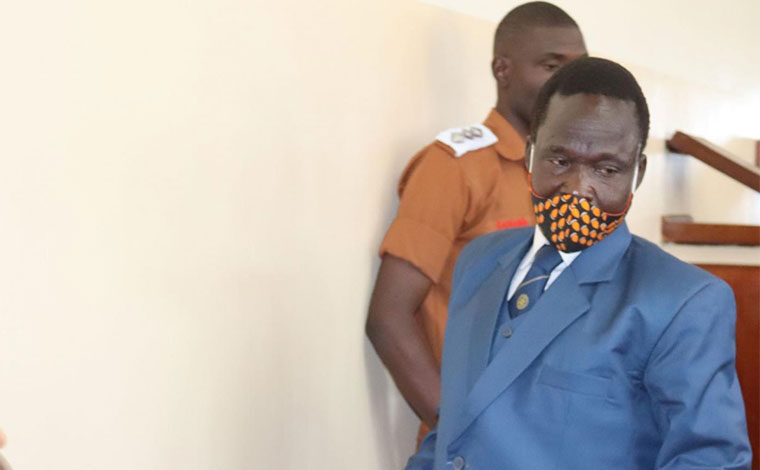
The International Crimes Division of the High Court sitting in Gulu City has today, 18th December, 2023 ruled that former Lord’s Resistance Army (LRA) commander, Thomas Kwoyelo, has 78 cases to answer.
Kwoyelo was facing 93 counts of charges of war crimes and crimes against humanity related to sexual violence, murder, kidnap, robbery, pillaging and also enslavement to torture.
He has been on remand since March 2009 when he was captured by the UPDF soldiers in Garamba National Park in the Democratic Republic of Congo.
On August 30, 2018 the International Crimes Division (ICD) of the High Court in Kampala finally confirmed 93 charges against former Lord’s Resistance Army (LRA) commander Thomas Kwoyelo, who has been in detention since 2008.
For Kwoyelo, the wheels of justice have undoubtedly been slowed by numerous delays in his trial. Following his capture in 2008, Kwoyelo first appeared before the ICD in 2011. The start of his trial was delayed due to a preliminary objection raised by his defense lawyers who argued that he was entitled to amnesty under Uganda’s amnesty law, which was valid at the time of his capture.
This matter was not settled until 2015, when Uganda’s Supreme Court ruled that Kwoyelo’s trial was constitutional and did not breach Uganda’s amnesty law.
In 2016, three pre-trial hearings were held in April, August, and September, while in 2017, four pre-trial hearings were held in January, February, March, and July. While these pre-trial hearings were meant to pave the way for the confirmation of the charges against Kwoyelo, they instead created legal challenges that further stalled the trial.
At one point, Kwoyelo’s defense counsel labelled the charges as “fatally and incurably defective,” arguing that the conflict in Uganda was largely domestic, and the prosecution cannot therefore charge Kwoyelo under international criminal law.
Other factors that caused delays included objections by the defense that Kwoyelo was not medically fit to stand trial, a delay in translation of the charge sheet and other documents into the Acholi language, and a disagreement between the defense and the prosecution over redaction and delayed disclosure of evidence.


