
By Steven Enatu
SERERE
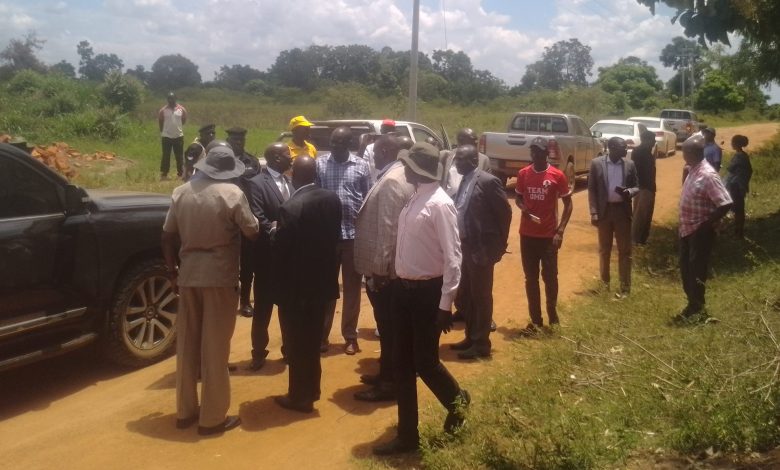
Residents of Serere District are urging the Ministry of Energy and Mineral Development to expand electricity access beyond roadside centers and homes. Their concerns were voiced on Friday, October 11, 2024, at Kateta Sub County during the launch of the Ochapa-Kateta line, part of the Accelerated Rural Electrification Project funded by a World Bank loan. The event was attended by Sidronius Okasai Opolot, the State Minister for Energy, along with local district leaders.
This project aims to construct medium and low voltage networks, install poles, mount transformers, and provide last-mile electricity connections. Despite these efforts, many residents express frustration over the lack of access to power in their homes.
Teddy Ageata, a resident from Oburekor village in Orupe Parish, stated, “We were told to wire our houses, which we did, but up to now, we have no hope of getting power. Our wish is to have power connected to our homes, but there isn’t a single pole near us.” She emphasized that electricity is crucial for lighting and household appliances like refrigerators.
Michael Opolot, the local council chairperson of Omagara village, highlighted the disparity in power access, saying, “Our village has 472 households, but only those within the trading centers along the power lines are connected. This goes against the wishes of the people who need power at the grassroots level.”
Christopher Opio, the local council chairperson of Katete Parish, echoed these sentiments, noting that out of eight villages in his parish, only those near the centers have access to power. “The entire community wishes to have power connected to our homes, schools, and health centers,” he remarked.
Electricity is an essential utility that has the potential to transform communities by empowering them financially. Without it, many communities in Serere and other parts of Uganda struggle to secure the resources necessary for development, which profoundly impacts their lives.
Max Opolot from Awiny Agule Parish expressed his gratitude for witnessing the launch of the Ochapa-Kateta line, recalling how power previously connected in his center of Olagara had boosted local trade until it was disconnected. He urged the Ministry of Energy to consider extending power beyond Olagara to other centers and schools.
Residents aspire to use electricity for small-scale enterprises such as metal fabrication workshops and salons. Access to electricity would not only allow for cold beverages but also enable children to read at night. Small businesses create jobs and provide skills, improving overall community well-being. Increased access to power would enable more people to transition from feature phones to smartphones, enhancing their ability to access information and services.
The area Member of Parliament, Emmanuel Omoding, emphasized the importance of the Rural Electrification Program in alleviating poverty. He reaffirmed his commitment to advocating for equitable access to electricity for all communities, including his home sub-county, Olio, which remains without power. “It’s not just my parish; neighboring areas also lack power, despite the presence of power poles,” he lamented.
Eng. Abdon Atwine, the commissioner of the Rural Electrification Program, acknowledged the existing service gaps but assured residents that efforts are underway to include unconnected villages in future projects. He mentioned ongoing negotiations with the Soroti power line to resolve power outages in Serere. “The old Ngora line is not reliable,” he noted, appealing to locals to allow electricity poles to pass through their land without disruption. “Unlike airtime, which you cannot trace, power needs land for poles,” he explained.
Atwine outlined the three categories of power lines:
- High Voltage: Carried on metallic poles, such as those running from Lira to Soroti. The government compensates for land, trees, and crops.
- Medium Voltage: Utilizes wooden or concrete poles, delivering power from high voltage to lower voltage for homesteads. The government does not compensate for crops and trees in this case.
- Low Voltage: Connects transformers to households, facilitating local access to electricity.
Minister Sidronius Okasai Opolot urged residents to remain calm, assuring them that the ministry is actively addressing their concerns. He acknowledged that some delays were due to residents refusing to allow power lines to cross their land but reaffirmed the government’s commitment to connect every home by 2030.
He introduced the Electricity Access Scale-Up Project, which aims to cover unconnected areas, emphasizing free connections. To benefit from this project, residents must have a National Identification, a wiring certificate, and a map of their homes, along with an inspection fee of 41,300 shillings. Additionally, there is a small fee of 5,000 shillings for loading the first units of power.
Uganda’s Vision 2040 aims to significantly enhance electricity access across the country, with objectives to increase the national electricity access rate to 60% by 2040 and promote renewable energy sources. This vision emphasizes investments in infrastructure, grid expansion, and off-grid solutions, particularly in rural areas, ensuring that all citizens have access to reliable and affordable electricity.
The National Development Plan III underscores that improved electricity access is critical for achieving Uganda’s development goals and supporting sectors such as industry, healthcare, and education. As residents of Serere continue to advocate for equitable electricity access, their voices highlight the urgent need for comprehensive solutions to meet the energy demands of rural communities.


