
By Delux Emmy Alomu
SERERE
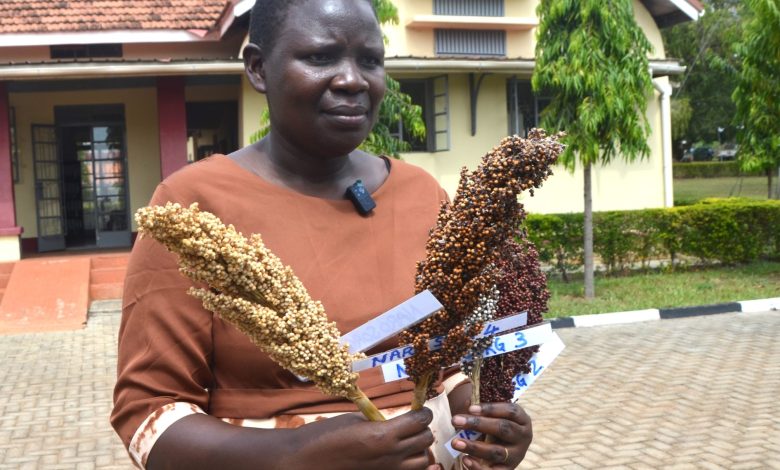
In an effort to tackle malnutrition and hunger in the drylands and semi-arid regions of East Africa, researchers at the National Semi-Arid Resources Research Institute (NaSARRI) in Serere district are developing sorghum that is enriched with zinc and iron.
Sorghum is a staple food for many Ugandans in the East, North, and parts of the West, recognized as a cost-effective source of energy, particularly for low-income populations. The crop is not only drought-tolerant but also high-yielding, making it vital for the communities that rely on its cultivation. Furthermore, sorghum plays a significant role in the brewing industry and serves as essential animal fodder.
However, despite these benefits, traditional varieties of sorghum often lack sufficient quantities of iron and zinc—micronutrients crucial for the body’s proper functioning.
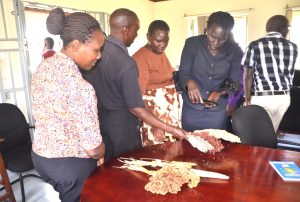
At a review meeting on the sorghum biofortification project held at NaSARRI-Serere on Tuesday February 17th, 2026, Dr. Scovia Adikini, the team leader for dryland cereals research at NaSARRI, highlighted that the aim of this project is to enhance the nutritional quality of both the sorghum grain and its stover, addressing the nutritional needs of both humans and livestock.
Biofortification involves increasing the micronutrient levels in food crops through methods such as selective breeding, genetic modification, or the application of enriched fertilizers.
According to Dr. Adikini, while humans consume the grain, livestock rely on the stover, making it essential to improve the nutritional quality of both.
The focus for the grain is primarily on boosting iron and zinc levels, as iron plays a critical role in regulating blood health.
Dr. Adikini pointed out that many individuals in these regions suffer from malnutrition due to a lack of these micronutrients, and this project aims to enhance their content in the available sorghum varieties.
“It’s important to realize that some of the varieties grown in these areas have low nutrient quality regarding micronutrients, especially iron and zinc. This affects both human populations and livestock, as farmers typically engage in both crop production and livestock rearing in dryland regions,” she explained.
Currently, sorghum contains moderate levels of iron and zinc (30 mg/kg and 20 mg/kg, respectively), but the goal is to elevate these to 60 mg/kg for iron and 32 mg/kg for zinc. Most farmers also feed their livestock sorghum stover after harvest, which means that the animals are also at risk of nutritional deficiencies.
Dr. Adikini highlighted that their research aims to benefit both humans and animals by enhancing the quality of sorghum consumed.
“Our goal is to boost nutrition for smallholder farming households that primarily depend on sorghum. We focus on increasing the micronutrient content, particularly iron and zinc,” she explained.
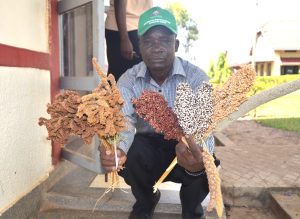
The research team has thoroughly characterized both released and unreleased sorghum varieties, identifying those with higher iron levels, as well as low hydrogen cyanide, phytate, and tannin content.
Dr. Adikini emphasized the dangers posed by stovers with high cyanide levels, which can be lethal to livestock—a fact many farmers may be unaware of.
So far, they have successfully analyzed over 500 sorghum lines, pinpointing varieties that contain high iron and zinc yet maintain low hydrogen cyanide levels.
Dr. Adikini is committed to ensuring that any sorghum they promote will have high iron content in the grains and zinc, while also ensuring that the stovers remain low in hydrogen cyanide, which is essential for both human and livestock health.
By achieving these enhancements, she believes they will significantly improve overall health, food quality, and livestock products in the community.
“We aim for a comprehensive improvement in human health through access to nutritionally rich livestock products, alongside high-quality sorghum,” she stated.
Currently, the scientists have identified promising varieties that will be considered for release once all analyses and evaluations are complete, focusing on those high in iron and low in hydrogen cyanide.
This research, funded by the Foundation for Food and Agricultural Research, CIMMYT, and NARO, is expected to span four years, with collaborative support from Makerere University, AgroMax Uganda Ltd., and international partners like Clemson University and Cornell University.
Dr. Adikini assures that their work does not involve any genetic modification.
“At NaSARRI, we practice conventional breeding. We don’t engage in genetically modified research. Instead, we use pollen from one plant to fertilize another plant of interest,” she explained.
NASARRI is one of the public agricultural research institutes that fall under Uganda’s National Agricultural Research Organisation (NARO).


