
By Nanteza Ruth Walusimbi
NATIONAL
Government has received an approval from the World Bank of $540 million (approx. UGX 2.1 trillion) USD 80M of which is a grant.
The funding is for the second phase of Uganda Cities & Municipalities Infrastructure Development Program.
The Program Objective is to enhance the institutional performance of selected urban local governments and ministries for urban planning and management and improve access to climate smart infrastructure, services and jobs for urban residents and displaced populations in refugee-hosting areas.
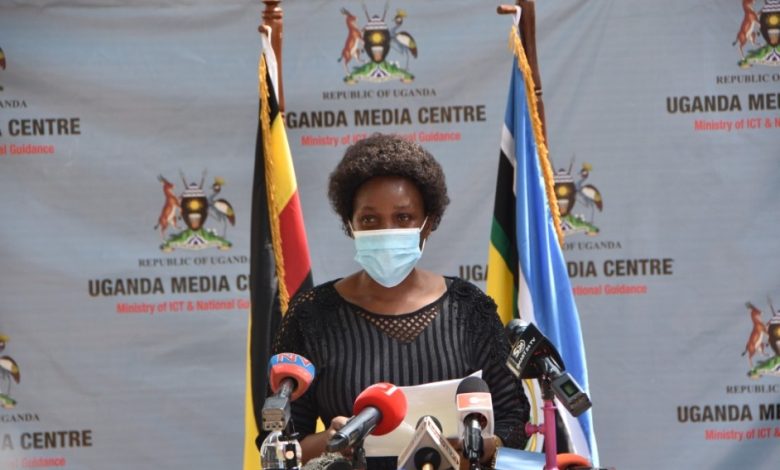
This has been revealed by the minister for Lands, Housing and Urban Development, Judith Nabakooba on 7th April, 2026 at Uganda Media Center in Kampala who said that the project will be implemented over a period of 6 years, commencing 2026/2027 to 2030/2031, and will be coordinated and managed by the Lands Ministry, and implemented within 10 regional cities, 26 municipalities, and 13 refugee-hosting districts.
The beneficiary local governments include cities of Lira, Arua, Gulu, Soroti, Mbale, Hoima, Fort Portal, Jinja, Mbarara and Masaka and 11 Municipalities namely Busia, Kitgum, Apac, Tororo, Kamuli, Lugazi, Moroto, Kabale, Ntungamo, Mubende and Kasese.
The new 15 Municipalities coming on board now are Mityana, Njeru, Bugiri, Rukungiri, Kisoro, Kapchorwa, Iganga, Kotido, Koboko, Sheema, Ishaka-Bushenyi, Ibanda, Kumi, Masindi and Nebbi.
An expanded urban infrastructure will also foster a more supportive environment for informal and small businesses, vendors, and traders to succeed. During the 10-year period alone, Uganda’s urban population is projected to grow by 69%, adding an estimated 8.1 million people to the country’s urban areas alone. An estimated 70% of GDP can be generated in Uganda’s urban areas, where only 27 % of the population lives.
Uganda’s Fourth National Development Plan (NDPIV) (2025/26–2029/30) sets ambitious targets like: achieving higher household incomes, full monetization of the economy, and creating 2.5 million new jobs.
“Urbanization is therefore recognized as a critical enabler of these goals, especially for youth and women. UCMID therefore represents the next phase of Uganda’s urban reform agenda, positioning cities and municipalities at the heart of job creation, productivity gains, and economic transformation.” Said Minister Nabakooba.
UCMID will also institutionalize reforms that position cities as drivers of Uganda Vision 2040 and Uganda NDPIV by aligning urban growth with a long-term jobs agenda, leveraging private sector participation, and building governance systems that enable continuity and scale.
Minister Nabakooba urged Local Government leaders to ensure all pending environmental and social safeguards are met to facilitate a seamless commencement of works in the upcoming fiscal year.


