
By Emmanuel Olinga
KATAKWI
Hundreds of farmers in Katakwi district are counting losses after a devastating hailstorm destroyed their crops.
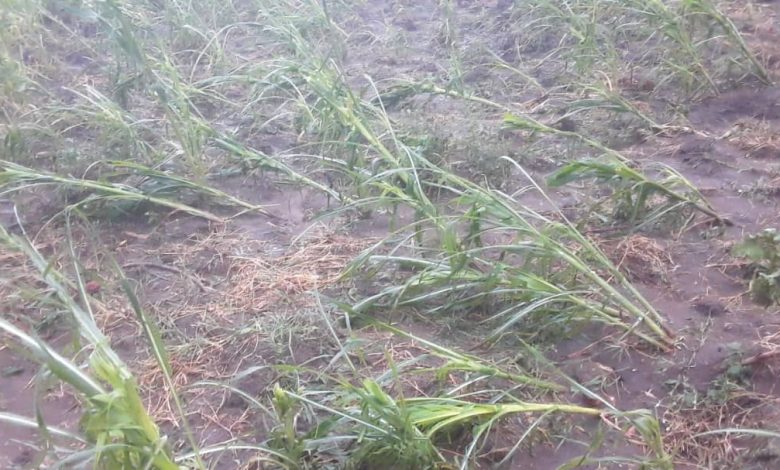
Among the most impacted five villages are Aguriguri, Apuuton, Angoobo, Apollin, and Atiriiri in Apollin Parish, Katakwi Sub-County, Ngariam County, where a hailstorm devastated roughly 500 crop gardens.
The natural disaster that shook people on Thursday evening, April 23, 2026, at around 5 p.m., followed a long-awaited return of rainfall following a three-week drought spell that began in early February and lasted into March before disappearing for the month of April.
The downpour was accompanied by hailstorms, which destroyed multiple gardens of crops such as sorghum, groundnuts, maize, cassava, beans, millet, and rice, leaving farmers unsure of what to replant.
According to Daniel Olaki, a farmer in Agurigur Village, the return of the long-awaited rains was accompanied by wind and hailstorms, which affected crop gardens and houses, leaving farmers disappointed and concerned about food insecurity and famine in the future, particularly in Agurigur, Apuuton, and Angobo, as well as in two other villages, Apollin and Atiriiri.
Other farmers in Apollin Parish, such as John Peter Aomat, 61, a resident of Aguriguri whose twenty-five chicks were struck down and two gardens destroyed, have urged for government assistance to reach the ground and provide seed relief.
Robert Ibwala, LCI chairperson of Aguriguri Village, whose six gardens were devastated, stated that the hailstorm affected roughly 500 garden crops of maize, groundnuts, cassava, and rice plantations that were planted for the first harvest.
Max Oleumo, Vice Chairperson Apollin, stated that the hailstorms have devastated the entire parish of Apollin, and urged the Katakwi Disaster Committee and the Ministry of Prime Minister’s Office OPM to provide farmers with replanting seeds.
Oleumo is concerned about hunger and food insecurity in the near future as a result of these natural calamities, which are compounded by the high expense of living, particularly with the flu and market commodities on the rise.


