
By Mike Rwothomio
ZOMBO
Zombo District is targeting an increase in annual coffee exports to approximately 61 metric tonnes within the next five years, through expanded coffee production, improved farm productivity, increased access to agricultural inputs and strengthened agricultural extension services.
The district currently has about 9,500 hectares under coffee cultivation, with average productivity estimated at 0.1 kilogram per tree. Authorities are targeting an increase to three kilogrammes per tree to boost production and position coffee as a major driver of household incomes and economic growth.
According to the Ministry of Agriculture, Animal Industry and Fisheries (MAAIF), Zombo exported 5.6 metric tonnes of parchment coffee in 2026, highlighting the gap between current export performance and the district’s five-year target.
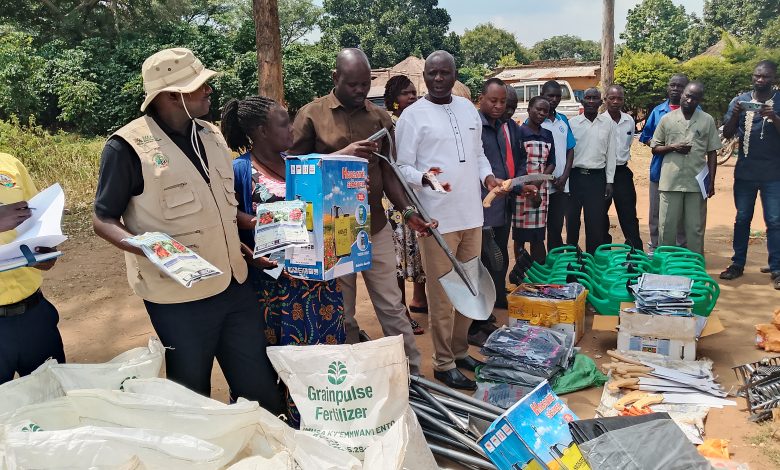
District Production Officer, Dr. Walter Kumakech said the target would be achieved through deliberate government interventions focusing on the distribution of improved coffee seedlings, fertilisers and other agricultural inputs to farmers.
He said the district would also strengthen agricultural extension and advisory services to equip farmers with improved agronomic practices, enhance crop management, increase yields, improve coffee quality and minimise post-harvest losses.
“We intend to increase coffee production and exports from the district to approximately 61 metric tonnes per annum within the next five years through targeted government intervention, including the supply of coffee seedlings, fertiliser and associated agro-inputs to farmers,” Kumakech said.
He added that continuous provision of quality extension services would be critical in improving productivity across coffee-growing communities.
The district is also banking on its favourable agro-ecological conditions to achieve the target.
Zombo has fertile clay-loam soils with high water-retention capacity, which support crop growth and help reduce moisture stress during prolonged dry spells.
To address climate variability and increasingly unpredictable weather patterns, the district is promoting water-for-production systems to supplement rainfall, improve soil moisture management and strengthen climate resilience among farmers.
Kumakech said the district would use the coffee conference to identify and address constraints affecting the local coffee value chain, including production, post-harvest handling, processing, value addition and market access.
In rural districts such as Zombo in the West Nile region, coffee is far more than a cash crop; it is a foundation of household resilience and local economic development.
The highlands of Zombo, Nebbi and neighbouring areas produce distinctive Arabica coffee known for its mild, sweet aroma and unique flavour profile, grown largely on small family plots.
However, many communities in Zombo and parts of Nebbi and Arua that grow coffee have over the years never witnessed immense benefits of the commodity often called “green gold.”
District Agricultural Officer, Patrick Aneniu said the strategy would extend beyond increasing production to promoting sustainable agriculture, climate-smart farming, environmental conservation and integrated farming systems.
He said farmers would be equipped with practical knowledge and technologies to improve agricultural productivity, strengthen food and nutrition security and increase household incomes despite challenges such as soil degradation, land fragmentation and changing weather conditions.
Zombo’s average household landholding is estimated at three acres, making improved farm productivity and efficient land utilisation essential to the district’s agricultural transformation agenda.
Chief Administrative Officer, Robert Abenaitwe said the district intended to use the agricultural exhibition to strengthen farmers’ capacity to undertake commercial coffee production and benefit from available agricultural opportunities.
Meanwhile, Charles Etoma, the Regional Agricultural Officer for Arua under MAAIF, confirmed that the ministry would provide technical support for the planned agricultural event.
District Tourism Officer, Jovian Kayeny said the initiative would also provide an opportunity to promote Zombo’s tourism potential and showcase the cultural heritage of the Alur, Kebu, Lendu, Madi and Lugbara communities.
Zombo’s coffee ambition will be among the major highlights of the three-day Agricultural Trade Show and Coffee Conference scheduled for November 11–13, 2026, at the Kyambogo University Paidha Campus playground.
The event will be held under the theme, “Building Climate Resilient Agriculture for Sustainable Agro-industrialisation and Market Linkages for Wealth Creation.”
The exhibition is expected to bring together farmers, researchers, agricultural extension officers, agro-input dealers, processors, manufacturers, traders, buyers, investors and policymakers from West Nile, Northern Uganda and beyond.
The Minister of Agriculture, Animal Industry and Fisheries is expected to grace the event as Guest of Honour.
Besides coffee, the exhibition will showcase other priority agricultural value chains, including bananas, Irish potatoes, tea, cassava, honey, horticulture, aquaculture, dairy, poultry and small ruminants.
The conference will provide a platform for farmers to access modern agricultural technologies, improved planting materials, research findings and practical knowledge on commercial farming, agro-processing and value addition.
Participating institutions are expected to include MAAIF, the National Agricultural Research Organisation (NARO), the National Coffee Research Institute (NaCORI), development partners, civil society organisations and religious and cultural leaders.
District LCV Chairperson James Oruna Oyullu, who also chairs the organising committee, called on farmers, local leaders, business communities and stakeholders from coffee-producing districts across West Nile to participate in the exhibition.
Beyond agricultural promotion and business networking, the event will showcase traditional dances, cultural regalia and local cuisines, highlighting the region’s cultural diversity and untapped tourism potential.
Uganda’s Growing Coffee Export Market
Zombo’s coffee production ambitions come at a time when Uganda’s coffee sector is registering significant growth in export volumes and earnings.
Coffee remains Uganda’s leading agricultural export and a critical source of foreign exchange. Recent figures from MAAIF show the sector has reached historic highs.
In the twelve months ending October 2025, Uganda exported 8.4 million 60-kilogramme bags of coffee valued at US$2.4 billion (approximately UGX 8.2 trillion).
This represented a 47 per cent increase in volume and a 77 per cent surge in value compared with the previous corresponding period, when the country shipped 5.8 million bags worth US$1.3 billion.
Earlier in the 2024/25 coffee year, figures of 8.2 million bags earning US$2.3 billion and 7.93 million bags generating US$2.24 billion were also reported, all pointing to sustained growth driven by higher production, improved quality and elevated global prices.
Robusta continues to dominate export volumes, typically accounting for 80–90 per cent of shipments, while Arabica has recorded the fastest growth in both volume and value. In some months, Arabica exports more than doubled year-on-year as buyers sought higher-quality lots from Mount Elgon and the West Nile highlands.
According to MAAIF, by 2030, Uganda officially expects to export 20 million 60-kilogramme bags of coffee, targeting a revenue milestone of UGX 20 trillion (approximately US$5.4 billion).


